

Cold Plunge Buying Guide: How to Choose a Low-Maintenance Model
When buying a cold plunge, many shoppers focus mainly on how cold the water can get. However, the lowest temperature is only one part of the ownership experience.
For regular users, water maintenance, drainage, filtration, insulation, chiller accessibility, replacement parts, and after-sales support can have a much greater impact on long-term satisfaction.
A well-designed cold plunge should not only provide stable temperature control. It should also make daily cleaning, water management, and equipment maintenance as simple as possible.
1. Choose Effective Water Circulation and Filtration
Water maintenance is one of the first things buyers should consider.
Cold plunges without circulation and filtration may require more frequent draining, cleaning, and refilling. For users who plunge several times a week, this can quickly become inconvenient.
A circulation system continuously moves water through the filtration system, helping remove impurities and maintain more consistent water conditions.
Many Modern Cold Plunge systems combine water circulation with filtration and sanitation. For example, severalVapaSauna Cold Plunge models feature independent circulation, double-layer filtration, and ozone sanitation to support easier water management.
However, filtration does not eliminate the need for regular cleaning or water treatment. Users should still monitor water quality and follow the manufacturer's maintenance recommendations.
Buying tip: Check whether the system includes circulation, filtration, and sanitation rather than looking only at chiller power.
2. Check the Drainage Design
Drainage is easy to overlook when comparing cold plunges, but it can make a significant difference to daily maintenance.
A well-designed drainage system should allow water to exit from a practical low point and provide a convenient connection for a drainage hose. This helps minimize residual water and makes routine cleaning easier.
This is particularly important for outdoor and commercial installations, where regular water replacement may be required.
Vapasauna offers different cold plunge configurations, so drainage and connection methods can vary by model. For example, the CT004 is designed to connect to an external chiller and uses dedicated inlet and outlet connections.
Buying tip: Before purchasing, confirm where the drain is located and whether the tub can be drained conveniently without manually moving or tilting it.
3. Don't Judge Cooling Performance by Chiller Power Alone
A powerful chiller is important, but it is not the only factor affecting cooling performance.
Actual cooling time and temperature stability depend on several factors:
- Water volume
- Starting water temperature
- Ambient temperature
- Insulation
- Water circulation
- Chiller capacity
- Target temperature
Good insulation helps reduce heat transfer from the surrounding environment, while effective circulation helps distribute temperature more evenly throughout the tub.
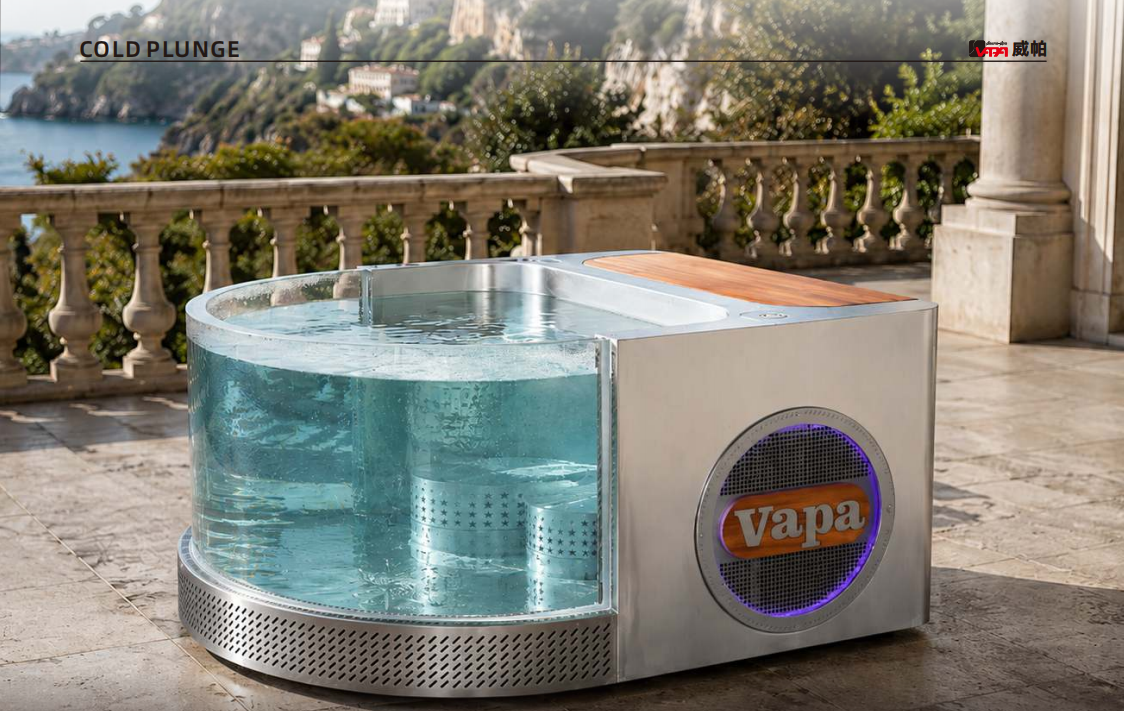
For example, the Vapasauna CT027A combines an integrated chiller with independent circulation, double-layer filtration, double-layer insulation, and ozone sanitation.
The CT035 also combines a built-in 1HP chiller with double filtration, ozone sanitation, and anti-freeze and defrost functions for home and commercial applications.
Buying tip: Compare the complete cooling system instead of choosing a cold plunge based only on horsepower.
4. Consider Chiller Accessibility and Future Maintenance
The chiller is one of the most important components in a temperature-controlled cold plunge. Like other mechanical equipment, it may eventually require inspection, cleaning, repair, or replacement.
There are two common configurations.
Built-In Chiller
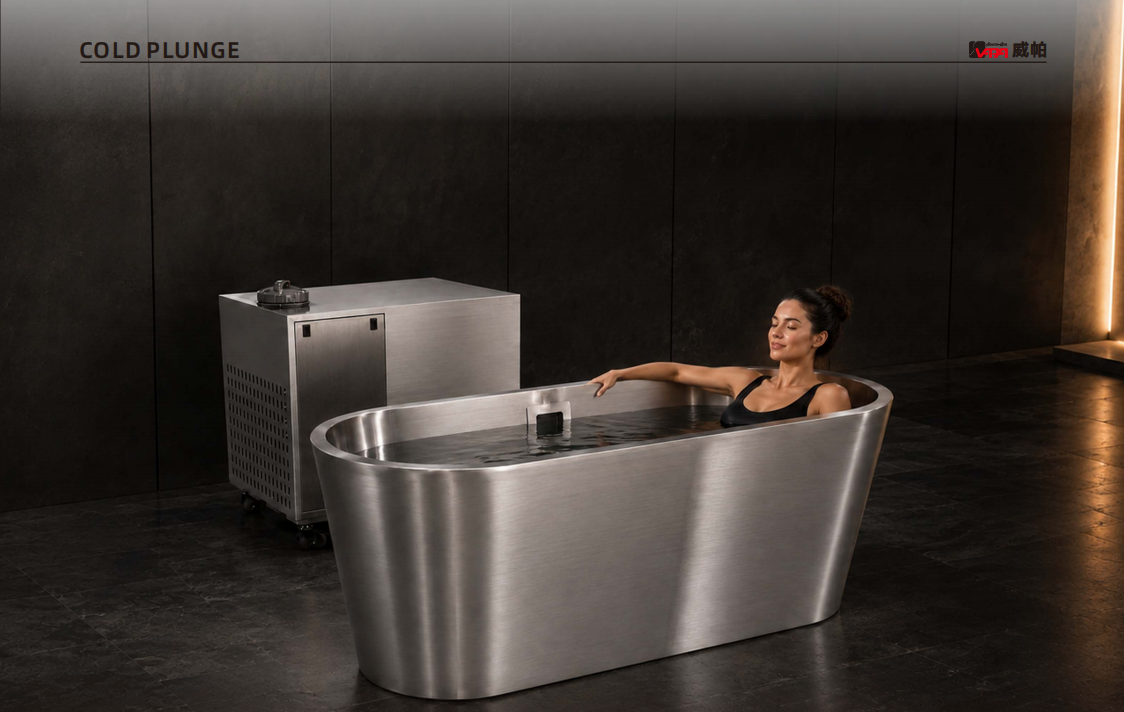
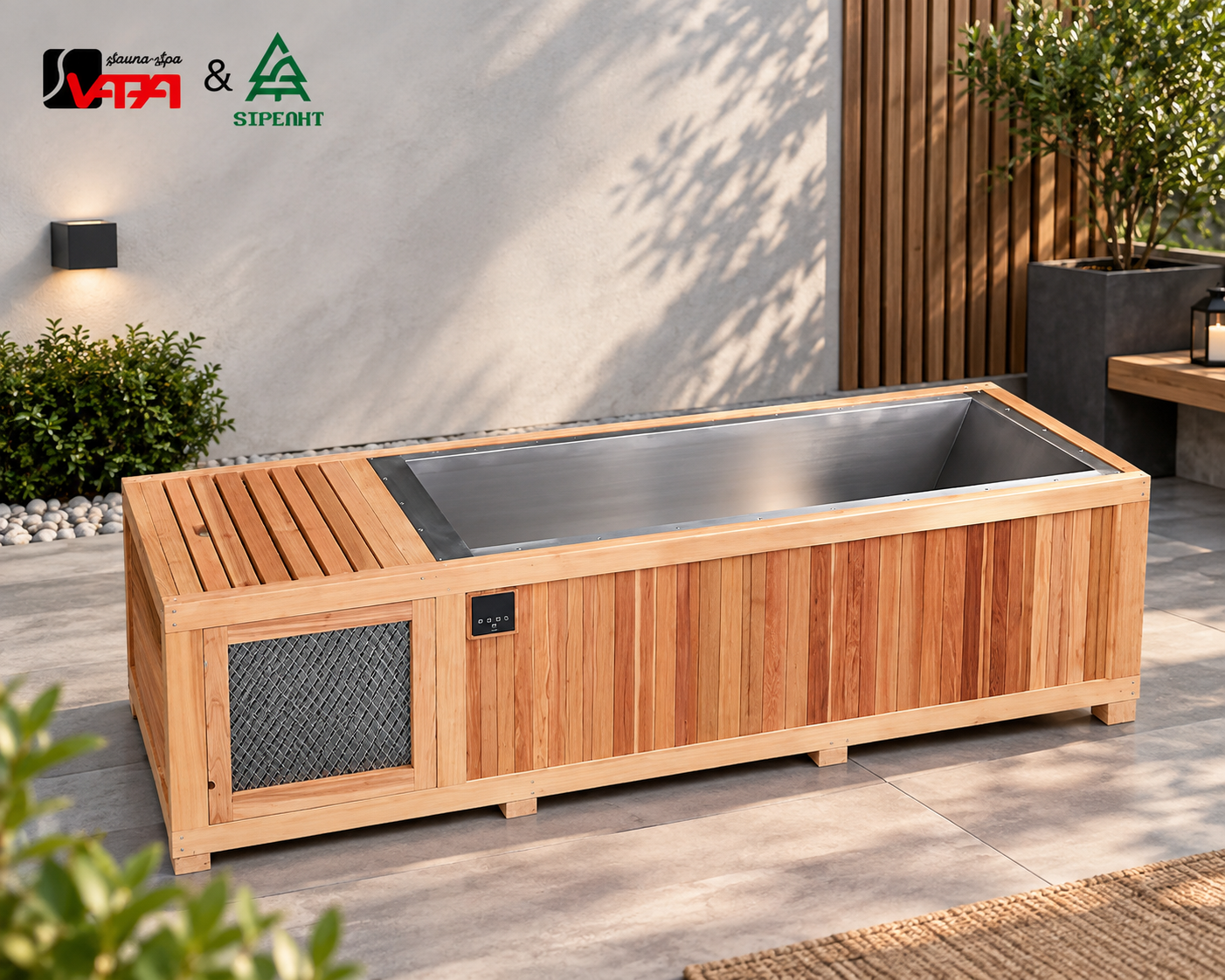
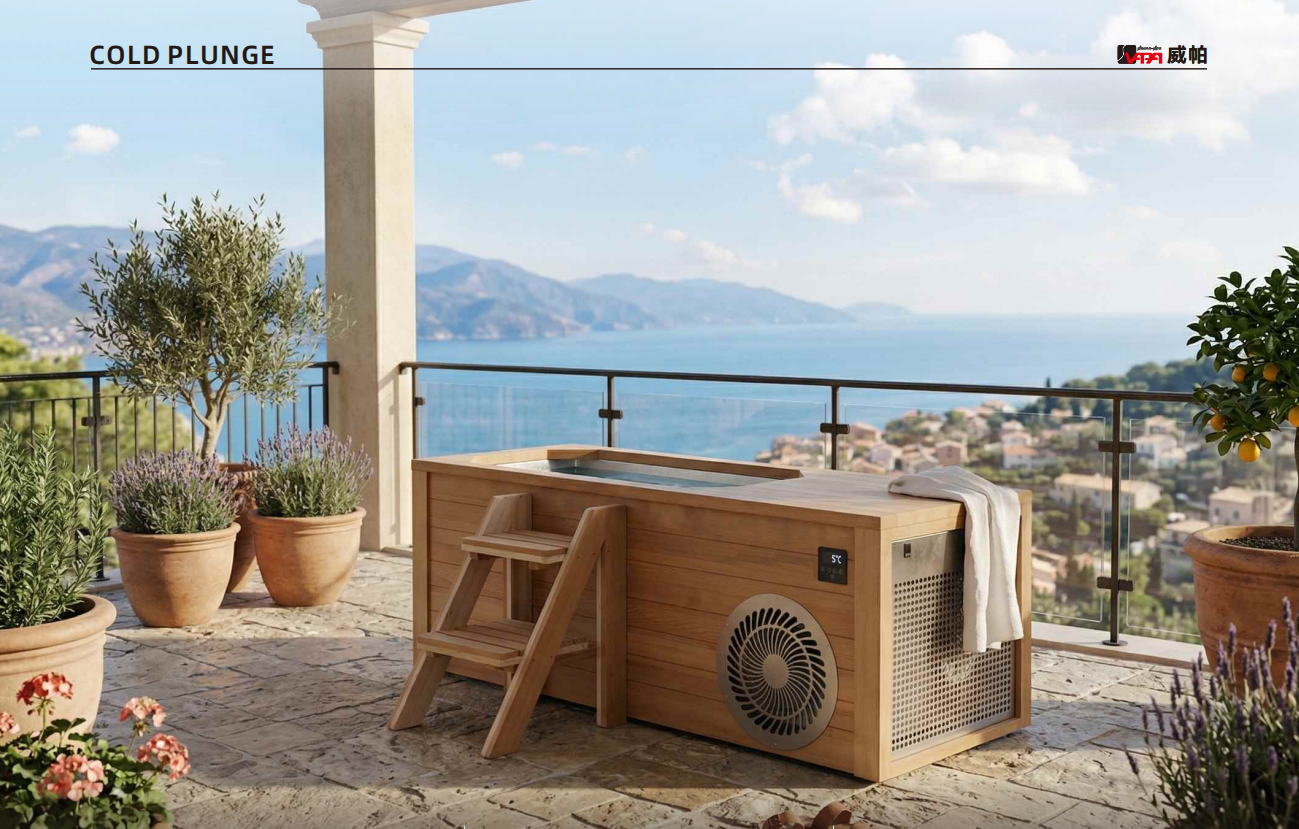
The chiller is integrated into The Cold Plunge.
This design provides a compact, clean appearance and can simplify installation for users looking for an all-in-one system.
External Chiller
The chiller is installed separately and connected to the tub through the water system.
This configuration can provide easier access to the cooling equipment in certain installation environments and may offer additional flexibility when servicing or replacing components.
Neither configuration is automatically better for every application.
The right choice depends on available space, installation requirements, maintenance preferences, and intended use. Vapasauna currently offers both integrated and external-chiller configurations across different models.
Buying tip: Ask the supplier how the chiller is accessed, which components can be replaced, and how technical support is provided after the warranty period.
5. Pay Attention to the Tub's Interior Material
The tub itself also plays an important role in long-term maintenance.
Because a cold plunge holds water for extended periods, corrosion resistance, surface cleanliness, sealing quality, and structural durability all matter.
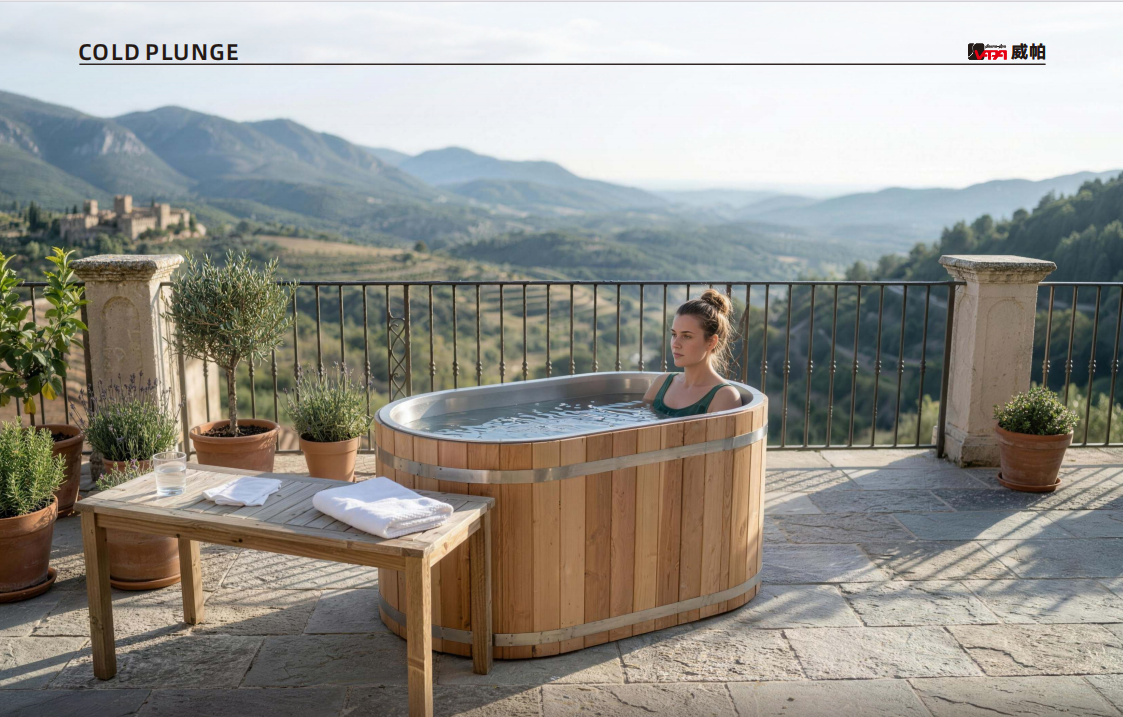
Stainless steel is widely used in premium cold plunge systems because it provides a durable, corrosion-resistant surface that is relatively easy to clean.
Vapasauna offers models with 304 or 316 stainless steel interiors depending on the product. The CT035, for example, offers both 304 and 316 stainless steel interior options.
Some models also combine stainless steel interiors with natural wood exteriors such as red cedar, spruce, hemlock, or thermo wood.
Buying tip: Don't evaluate the tub only by its exterior appearance. Check the interior material, thickness, joints, sealing components, and pipe connections as well.
6. Look for Proper Insulation
Insulation is another important factor that is often overlooked.
Good insulation helps reduce heat transfer between the surrounding environment and the cold water, allowing the cooling system to maintain the target temperature more efficiently.
This becomes especially important when a cold plunge is installed outdoors or used during hot weather.
Several Vapasauna models use double-layer insulation together with an insulated cover to help maintain stable water temperatures.
Buying tip: Check both the tub insulation and the cover. Even a well-insulated tub can gain heat quickly if the water is left uncovered in a hot outdoor environment.
7. Don't Ignore Replacement Parts and After-Sales Support
A cold plunge can remain in service for many years, but components such as filters, pumps, fittings, and cooling equipment may eventually require maintenance or replacement.
For this reason, the initial purchase price should not be the only factor you consider.
Before ordering, ask the supplier about:
- Replacement filter availability
- Chiller and pump servicing
- Pipe and fitting specifications
- Warranty coverage
- Technical support
- Replacement components
- Recommended maintenance intervals
This is particularly important for commercial users such as gyms, spas, recovery centers, and hotels, where equipment downtime can affect daily operations.
Buying tip: Compare the complete ownership cost rather than only the purchase price.
8. Consider Plug-and-Play Installation
Another useful consideration is how much assembly is required after delivery.
Some cold plunges require separate installation of the chiller, pump, filtration system, and water connections. Others are designed with more integrated components to simplify installation.
For home users, simpler installation can reduce setup time and connection errors.
For commercial venues, faster installation can also help reduce the time between delivery and actual operation.
Before purchasing, confirm exactly what is included in the package, such as:
- Cold plunge tub
- Chiller
- Water pump
- Filtration components
- Hoses and fittings
- Cover
- Installation accessories
Who Benefits Most From a Low-Maintenance Cold Plunge?
A low-maintenance design can benefit a wide range of users.
Fitness enthusiasts can enjoy regular cold-water sessions without spending excessive time on water preparation and cleaning.
Busy professionals can benefit from a system that is easier to keep ready for regular use.
Home wellness spaces can benefit from integrated circulation, filtration, insulation, and temperature-control features.
Gyms, spas, recovery centers, and hotels need equipment that can handle frequent use while keeping water management and maintenance practical.
For these users, maintenance convenience can be just as important as cooling performance.
Cold Plunge Buying Checklist
Before purchasing, check the following:
| Feature | What to Check |
|---|---|
| Water circulation | Is water continuously circulated? |
| Filtration | Is the filter easy to access and maintain? |
| Sanitation | Is ozone or another sanitation system included? |
| Drainage | Can the tub be drained conveniently? |
| Insulation | Is the tub properly insulated? |
| Cover | Does the cover help reduce heat transfer? |
| Chiller | Is it built-in or external? |
| Serviceability | Can the cooling system be accessed for maintenance? |
| Interior | Is the material corrosion-resistant and easy to clean? |
| Parts | Are replacement components available? |
| Installation | Is the system easy to install? |
| After-sales | Is warranty and technical support available? |
Frequently Asked Questions
How often should I change cold plunge water?
There is no universal replacement schedule.
Water change frequency depends on usage, the number of users, filtration performance, sanitation, and water quality.
A cold plunge with effective circulation and filtration can reduce the need for frequent full water changes, but users should still monitor water quality and follow the manufacturer's maintenance recommendations.
Do cold plunge filters need to be replaced?
Yes.
Filters are consumable components and should be cleaned or replaced according to their condition and the manufacturer's recommendations.
Reduced water flow, visible contamination, or declining filtration performance can indicate that the filter needs attention.
Is a built-in chiller better than an external chiller?
Not necessarily.
Built-in chillers provide a compact and integrated solution, while external chillers can offer easier equipment access in certain installations.
The best option depends on available space, installation requirements, maintenance preferences, and the intended application.
Does a cold plunge require professional installation?
Not always.
Many residential systems are designed for relatively simple installation, but requirements vary by model.
Always confirm the required power supply, water connections, drainage, ventilation space, and installation instructions before setup.
Conclusion
A cold plunge should be evaluated as a complete long-term wellness system rather than simply a tub with a powerful chiller.
Effective circulation and filtration can simplify water management. Practical drainage can make cleaning easier. Proper insulation can help maintain stable temperatures. Accessible cooling components can simplify future servicing, while durable interior materials can reduce long-term maintenance concerns.
The best cold plunge is therefore not necessarily the one with the lowest advertised temperature or the cheapest initial price.
Instead, buyers should look for a system that balances stable cooling, practical water management, durable construction, serviceable components, and reliable after-sales support.
For users looking for a low-maintenance solution for home wellness, fitness recovery, or commercial applications, Vapasauna offers different cold plunge configurations designed for different installation and usage requirements. By evaluating the complete system rather than focusing only on the tub shell or chiller power, buyers can make a more informed long-term investment.