request to quote
Leave Your Message
0%

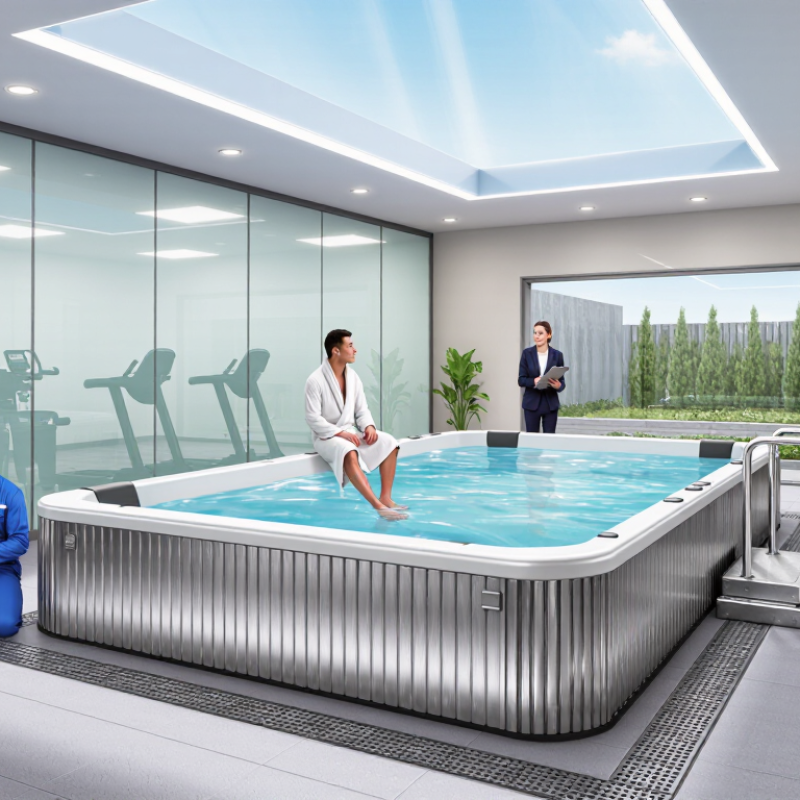
Picking the right unit isn't just about checking water temperature or shiny stainless-steel finishes. In this 2026 commercial cold plunge Tub Buying Guide, we take a closer look at the real-world factors that influence daily use, operating costs, and safety. Whether it’s for athletes, hotel guests, wellness members, or folks at a workplace, each setting has its own unique needs. A busy recovery studio, for instance, might require quick cooling, robust filtration, and easy cleaning. On the other hand, a boutique hotel might prioritize quiet operation, a small footprint, and an attractive look.

Dr. Susanna Søberg, a well-known researcher in cold exposure, once pointed out, “Cold exposure is a stressor, and your body needs to adapt.” That’s a pretty good point to keep in mind when choosing your equipment. A cold plunge isn’t some miracle machine. It needs proper programming, clear instructions for users, dependable sanitation, and careful temperature control. When shopping around, be sure to check things like cooling power, how well the water circulates, filtration and disinfection systems, electrical safety, drainage, ease of access, and warranty coverage. Don’t be shy — ask the tough questions.

A low price tag might seem like a smart move at first, but it can be a problem if maintenance gets delayed and disrupts bookings. Even a powerful chiller can fall flat if airflow is blocked or the room gets too warm. These tiny details often determine whether your equipment will keep working smoothly after months of heavy use. The best commercial hot tub solutions aren’t always the cheapest or most eye-catching, but they need to be the right fit for your space, your business model, and the people who’ll be using them. And let’s be honest — no specs sheet can predict every little challenge with installation. Making good decisions really comes down to doing some thorough research, hiring qualified pros, and paying close attention to what your daily workload actually looks like.
2026 Commercial Cold Plunge Tub Buying Guide

Define Commercial Use Cases, Capacity, and a 39–59°F (4–15°C) Target

2026 Commercial Cold Plunge Tub Buying Guide

Commercial use begins with traffic, not the tub’s advertised size. A fitness studio may need short, repeated sessions, while a hotel may prioritize quiet operation and simple guest controls.

Estimate peak hourly demand, session length, cleaning time, and recovery time between users. A tub that fits four people physically may serve fewer people effectively during busy periods.

Measure the entry area, drainage route, service clearance, and floor loading before ordering. Small details matter.

Set a controllable target between 39–59°F (4–15°C) then match it to your operating plan.

Lower temperatures require stronger refrigeration, better insulation, and closer monitoring. Warmer settings may reduce equipment strain, but they still need consistent control.

Check the water temperature under real user loads, not only when the tub is empty. A display can look precise while the water changes during busy periods.

That is easy to overlook.

Commercial equipment should support visible temperature readings, filtration, sanitation procedures, and straightforward maintenance logs.

Record water checks, filter changes, cleaning times, and unusual temperature swings.

Provide clear entry instructions, non-slip flooring, handrails, and a nearby clock.

Avoid promising universal health effects; user responses vary, and cold exposure is not suitable for everyone.

Staff should know when to pause operation and direct a customer toward appropriate medical guidance.

I would also leave service access around the unit. Crowded equipment rooms become expensive mistakes.

Size the Tub for 1–3 Users, 150–300 Gallons, and Required Facility Throughput

A commercial cold plunge tub should match real usage, not showroom appeal. For one to three users, 150–300 gallons usually provides practical room and manageable water volume. A smaller tub may restrict movement and create awkward entry points. A larger tank can increase heating, filtration, cleaning, and refill demands. Bigger is not automatically better.

Measure the facility’s peak demand by hour. Multiply users per session by expected sessions, then include cleaning and recovery time. For example, three users every 30 minutes create six user positions per hour. That capacity may require two tubs instead of one, depending on sanitation procedures and local requirements. Keep clear space around the tub for safe entry, supervision, drainage, and maintenance access. Door widths matter too.

Commercial operators should verify electrical loads, floor strength, water treatment, and applicable building codes before purchase. Ask for documented flow rates and realistic recovery times. Do not rely only on marketing capacity. The advertised user count may feel optimistic during busy periods. This is where planning can fail. Leave operational margin.

Some commercial hot tub optionsappear similar, but Cold Plunge Systems have different temperature-control and circulation needs. Record actual session length during a trial week. That simple log may reveal that a 200-gallon tub suits the site better than a 300-gallon model. It also exposes bottlenecks before installation.

Evaluate Cooling Power, Pull-Down Time, and Continuous Operation Under 60°F

A 2026 commercial cold plunge tub should be judged by measured cooling performance, not advertised minimum temperature. A Commercial Ice Tub may reach 50°F quickly, yet struggle when several users arrive. Ask for cooling capacity, water volume, ambient test conditions, and recovery data. Test logs matter. Record inlet temperature, target temperature, and elapsed time with a calibrated thermometer. Repeat the test at the warmest expected room temperature.

Pull-down time shows how fast the system removes heat from fresh or disturbed water. Measure from a defined starting temperature, such as 68°F, to the operating target. Do not compare a small insulated tank with a larger commercial unit without adjusting for volume. That comparison misleads. Continuous operation below 60°F requires more than a powerful compressor. Inspect insulation, filtration, ventilation clearance, electrical protection, and controller stability. During a practical trial, open the cover repeatedly and log temperature every 15 minutes. Watch for slow recovery.

Ask whether the unit can hold 55°F after repeated use, not merely reach it once. Review duty-cycle guidance, cleaning access, drain design, and service documentation. Reliable records should identify who measured the results, which instruments were used, and how long the test lasted. Be cautious with vague phrases like “rapid cooling” or “continuous duty.” Specifications can be incomplete. Even a careful test has limits: room temperature, water chemistry, and user load can change results. That uncertainty deserves a line in the purchasing worksheet.

Compare Filtration, Disinfection, and CDC/MAHC Targets of 2–5 ppm Chlorine

2026 Commercial Cold Plunge Tub Buying Guide

Chlorine control deserves more attention than water temperature. The CDC’s Healthy Swimming guidance lists 1–3 ppm free chlorine for pools and 3–5 ppmfor Hot Tubs. The Model Aquatic Health Code (MAHC) also treats chlorine, pH, stabilizer use, and water type as connected controls. Therefore, a2–5 ppm specification should not be presented as one universal CDC requirement. For commercial cold plunges, confirm the local health department’s interpretation before purchasing equipment.

Filtration removes particles. It does not reliably kill microorganisms. Disinfection does that work. A cartridge or sand filter should match the tub’s flow rate and expected bather load. The sanitizer system should maintain measurable free chlorine throughout circulation, not only near the dosing point.

Keep pH within the facility’s approved range, because chlorine performance changes as pH shifts. A DPD test kit can verify free chlorine more directly than a display alone.

I would not treat 2 ppm as a magic shield. It is only one reading. Poor turnover, clogged media, or long stagnant lines can still create weak zones. Commercial buyers should request documented turnover calculations, automatic dosing safeguards, alarm history, and a written testing schedule. The CDC recommends testing disinfectant and pH levels regularly, especially in heavily used aquatic settings. MAHC-based procedures also emphasize records and operator training. The best system is not the most automated one; it is the one staff can test, clean, and challenge every day.

Check Electrical Safety, GFCI Protection, 240V Loads, and Commercial Certifications

Buying a commercial cold plunge tub starts with electrical safety, not water temperature. NFPA’s 2022 report estimated 32,810 U.S. home fires annually involved electrical distribution or lighting equipment during 2016–2020. Commercial facilities face different conditions, including wet floors, frequent users, and longer operating hours. Keep the disconnect visible and accessible. Never place extension cords near the tub.

A qualified electrician should verify the load, conductor size, bonding, and grounding before installation. Many larger systems require a dedicated 240V circuit, but the nameplate determines the actual demand. Install GFCI protection as required by the current electrical code and local authority. Test the device according to the manufacturer’s instructions. A monthly check is sensible, though it is not a substitute for inspection. One missed connection can matter.

Look for third-party NRTL certification covering the complete electrical assembly, not only individual components. Standards such as UL 1563 may apply to spa and hot-tub equipment, while commercial aquatic equipment can involve NSF/ANSI 50 requirements. Confirm the scope with the certifier and inspector. A Commercial Hot Tub label alone proves little. Ask for test reports, wiring diagrams, leakage-current limits, and service records. I would also document the first installation inspection; memories become unreliable after several busy weeks.

Assess Insulation, Cover Design, Drainage, Maintenance, Warranty, and Total Cost

Buying a commercial cold plunge requires more than checking water temperature. Start with insulation around the basin, plumbing, and cabinet. Dense insulation can reduce heat exchange and support steadier operation. Ask for material thickness, seam protection, and performance details, not vague marketing claims.

The cover deserves equal attention. A tight, lightweight cover should resist moisture, remain easy to lift, and prevent debris from entering between sessions. Hinges and handles need to tolerate frequent commercial use. Drainage is often overlooked. Look for a low drain point, accessible valves, and a hose connection that reaches the floor drain without sharp bends. A small installation mistake can create a large cleaning problem.

Maintenance should be practical, not theoretical. Confirm filter access, replacement intervals, water-treatment instructions, and cleaning points before purchase. Keep a written service log with dates, readings, and replaced parts. Warranty terms need careful reading. Check coverage for the shell, chiller, pump, labor, shipping, and on-site service. Exclusions may matter more than the headline duration. Calculate total cost over several years, including electricity, filters, water, drainage work, delivery, and winter protection. I would leave room for uncertainty; repair costs rarely follow the original spreadsheet. A cheaper unit may become expensive when routine access is awkward.

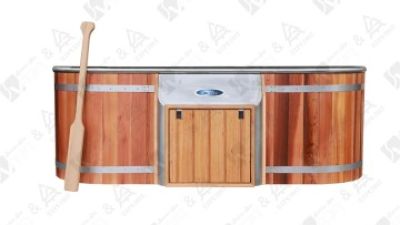
VAPASAUNA HT006E Review: A Stainless Steel Oval Electric Hot Tub for Two-Person Recovery

Designed for private recovery at home, this oval electric hot tub offers a comfortable space for one or two people. Its 1.5 mm thick 304 stainless steel construction provides a sturdy, corrosion-resistant body that feels more dependable than lightweight portable alternatives. The spacious interior is well suited to relaxing after exercise, while the 40 mm red cedar bench gives users a supportive place to sit. The wood also adds a warm natural aroma, helping create a calmer atmosphere during longer bathing sessions.

Temperature control is managed through an intuitive LCD screen, making it easy to adjust the water for different seasons and personal preferences. The built-in massage function adds gentle stimulation that may help loosen tired muscles and improve the overall recovery experience. A specially designed purification cartridge filters impurities from the water, offering a cleaner bathing environment and helping reduce direct exposure to unwanted particles. The stainless steel liner around the heating area is designed for efficient heating and heat retention, so the tub can maintain a comfortable temperature during use.

With room for two, this hot tub suits couples or anyone who prefers a little extra space while recovering. Its combination of durable materials, adjustable heat, massage features, and water filtration makes it practical for regular home relaxation, especially after workouts or physically demanding days.

FAQS

How should I estimate the right capacity for a commercial cold plunge?

Start with peak hourly demand, session length, cleaning time, and recovery time. A four-person tub may serve fewer users during busy periods. Use real traffic data. Guessing can be expensive.

What water temperature should a commercial cold plunge maintain?

Choose a controllable target between 39–59°F (4–15°C). Lower temperatures need stronger refrigeration and better insulation. Test the water during busy periods, not only when empty. The display may look accurate while the water fluctuates.

What site measurements should I check before installation?

Measure the entrance, drainage route, service clearance, and floor loading. Leave space around the equipment for repairs. Crowded service areas become frustrating quickly. I would measure twice.

Does filtration disinfect the water?

No. Filtration removes particles, while disinfection controls microorganisms. Match the filter to flow rate and expected bather load. Check for documented turnover calculations and stagnant pipe sections. Clean water can still need disinfection.

What sanitizer and testing practices are appropriate?

Maintain measurable free chlorine within the range approved by local authorities. Keep pH within the facility’s required range. Test regularly with a reliable DPD test kit. Record readings, filter changes, cleaning times, and unusual temperature swings. Two ppm is not a magic shield.

What electrical safety features should the tub include?

A qualified electrician should verify load, conductor size, bonding, and grounding. Larger systems may require a dedicated 240V circuit. The nameplate determines the actual demand. Use required GFCI protection. Never use extension cords near wet areas.

What certifications and documents should commercial buyers request?

Request certification for the complete electrical assembly, not isolated components. Ask for test reports, wiring diagrams, leakage-current limits, and service records. Confirm requirements with the local inspector. A label alone proves little.

What safety features should staff and customers have?

Provide non-slip flooring, handrails, clear entry instructions, and a nearby clock. Staff should understand when to pause operation. Cold exposure is not suitable for everyone. User responses vary. Avoid promising universal health benefits.

Conclusion

This Commercial Cold Plunge Tub Buying Guide explains how to choose a reliable system for gyms, wellness centers, hotels, clinics, and other shared facilities. Start by defining expected use, water temperature goals of 39–59°F (4–15°C), user capacity, and daily facility throughput. For most commercial settings, a tub designed for one to three users and approximately 150–300 gallons can offer a practical balance between comfort, operating cost, and recovery time.

Performance should be evaluated through cooling power, pull-down speed, and the ability to maintain temperature during continuous use, especially in environments above 60°F. Buyers should also review filtration, disinfection, and water-quality management, including chlorine targets commonly associated with CDC and MAHC guidance, such as 2–5 ppm where applicable. Electrical safety, GFCI protection, 240V requirements, and commercial certifications are equally important. Finally, compare insulation, cover quality, drainage, cleaning access, maintenance schedules, warranty coverage, and total ownership cost before making a purchase.
Olivia

Olivia

Olivia is a dedicated marketing professional based in Huizhou, China, where she plays a pivotal role in promoting her company's innovative products. With a strong background in scientific research and a passion for technological advancement, Olivia brings a wealth of knowledge and expertise to her......
Previous How to Choose a Commercial Cold Plunge Tub