request to quote
Leave Your Message
0%

Choosing a custom Cold Plunge Tub for international use isn’t just about comparing prices or browsing through photos. Honestly, there’s a lot more to it if you want something that really works long-term. This guide aims to walk you through the practical side of things—things like comfort, safety, maintenance, and making sure you’re getting value for your money. Sure, that tub might look super impressive online, but don’t forget—its insulation could be a total flop if it’s placed in a hot warehouse or gets battered during winter delivery. Small details like these really matter.

First things first, think about where you’re planning to install it. Measure the space, check that doorways will accommodate delivery, plan your drainage route, and see what kind of electrical capacity you’ve got available. Also, consider how hot you want the water, how many people will use it each day, and how fast you need it to recover between uses. A good supplier should be upfront and detailed—explaining how the chiller performs, how often you’ll need to clean the filters, what materials they use, what’s covered under warranty, and replacements. Don’t be shy—ask for test reports and detailed installation instructions. And remember, local electrical codes and water safety rules are a must to review.

Now, a quick note—this isn’t a wooden hot tub. Cold plunges are a different ballgame—they require specific insulation, circulation, and temp-control systems. Materials like stainless steel, fiberglass, acrylic, or insulated composite panels each have their own quirks when it comes to maintenance. A thoughtful supplier should be able to give you detailed drawings, samples, info about packaging, and reasonable timelines. This isn’t just marketing hype; it shows they’re prepared and serious about delivering.

Keep in mind, even small slip-ups can turn into costly problems later on.

If you’re buying from abroad, make sure you check how your tub will be protected during shipping, the paperwork needed for customs, how quick their support teams are, and whether the design suits your climate. Coastal areas might need better corrosion resistance, while a boutique gym might prioritize faster filtration and easier cleaning. For home users, things like quiet operation and compact size could be a big deal. Honestly, no checklist can cover everything. Even folks who’ve done this before sometimes overlook installation challenges or local service support. That’s why I suggest asking lots of questions, getting everything in writing, and verifying details independently before you hand over the cash. At the end of the day, the best custom cold plunge tub isn’t just about how it looks—it’s about if it’ll fit your space, last over time, and if support is actually available when you need it.
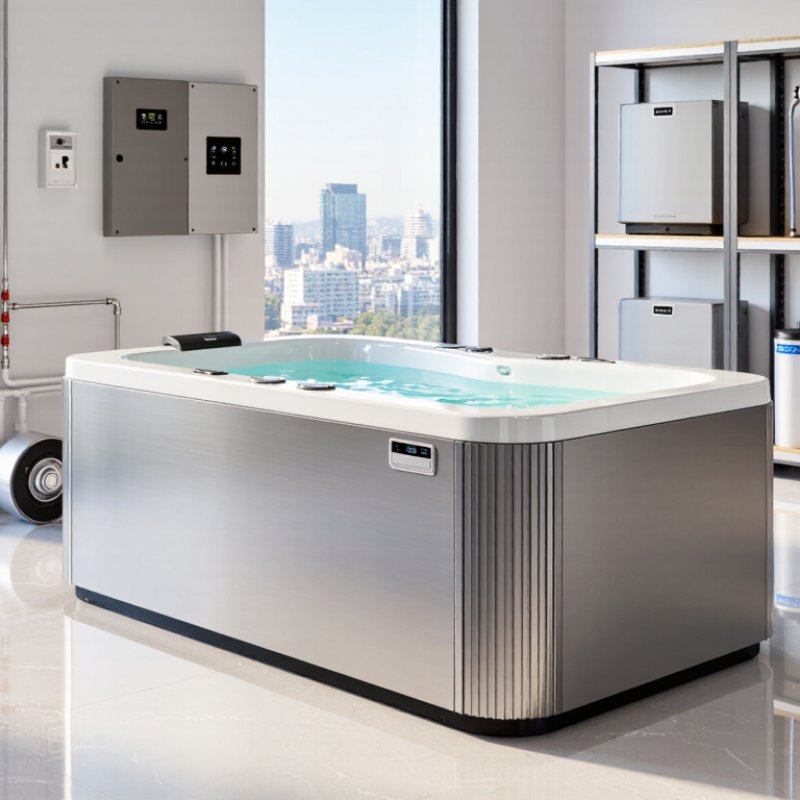
How to Choose a Custom Cold Plunge Tub for Global Buyers?

Define Your Cold Plunge Goals and User Requirements

Before choosing a custom cold plunge tub, define the user and the intended routine. Is it for one person, a family, a gym, or a hotel? The answer affects capacity, filtration, drainage, and cleaning time. The Global Wellness Institute reported that the global wellness economy reached $6.3 trillion in 2023. This growth suggests strong demand, but demand does not replace careful specification.

Set measurable goals. A recovery-focused buyer may prioritize fast cooling and stable temperature control. A commercial buyer may need durable panels, simple sanitation access, and safe entry steps. The American Heart Association’s 2021 scientific statement notes that sudden cold exposure can increase cardiovascular strain. Therefore, buyers should provide clear safety guidance and recommend medical advice for people with health concerns. Do not confuse a cold plunge with a Hot Tub Wood Steel Hot Tub. Their heating, insulation, and operating requirements differ.

**Tips:** Record the target water temperature, daily users, available floor space, local voltage, and drainage route. Check insulation thickness and compressor performance in the expected climate. Ask for testing documents, electrical compliance records, warranty terms, and replacement-part availability. A low quote may hide shipping, customs, installation, or maintenance costs. That mistake is easy to make. I would also question whether an oversized tub truly improves the user experience; it may simply increase water use, cooling time, and operating expense.

Compare Tub Types, Sizes, Materials, and Installation Formats

# How to Choose a Custom Cold Plunge Tub for Global Buyers

Choosing a custom cold plunge tub starts with the space, not the appearance. Compact seated tubs suit balconies, studios, and smaller bathrooms. Horizontal tubs offer more room, but they require stronger flooring and wider access routes. A freestanding model usually installs faster. Built-in formats create a cleaner look, yet repairs may become more difficult. Portable or modular designs can simplify international shipping and relocation.

Size affects water use, loading weight, cleaning time, and user comfort. Measure doorways, lifts, drainage points, and service clearance before approving a drawing. A tub measuring 180 centimeters long may not fit through a narrow apartment corridor. That detail is easy to miss. Consider how many people use it, but avoid choosing excessive capacity without a clear reason.

Material selection also changes long-term maintenance. Stainless steel offers a durable interior, while reinforced composite materials can reduce weight and shape limitations. Check surface finish, insulation layers, drainage hardware, and replacement-part availability. Ask suppliers for material documentation, electrical specifications, and waterproofing details. Installation requirements differ by country, especially for power connections and drainage. Use qualified local technicians when needed. I would not assume one format works everywhere. Climate, building structure, transport damage, and after-sales support can change the better choice. Some custom features look useful but create cleaning problems later. Practical testing should include emptying the tub, opening service panels, and moving it through the real installation path.

How to Choose a Custom Cold Plunge Tub for Global Buyers?

Typical residential specifications show that built-in tubs provide the largest water capacity but require the greatest installation area. Portable insulated and chest-style tubs offer a practical balance between capacity, mobility, insulation, and space efficiency. Inflatable tubs are usually the lightest and easiest to install, although their capacity and structural durability are more limited.

Values represent typical midpoints for residential cold plunge formats. Actual capacity and footprint vary according to insulation thickness, internal seating, filtration equipment, and custom dimensions.

Evaluate Cooling Systems, Temperature Control, and Energy Use

How to Choose a Custom Cold Plunge Tub for Global Buyers?

When selecting a custom Cold Plunge Tub, examine the cooling system before judging its appearance. A reliable chiller should maintain stable water temperature under repeated use. Ask for cooling capacity, operating range, filtration method, and noise ratings. Air-cooled systems may simplify installation, while water-cooled systems can perform differently in hot rooms. That matters. Check whether the system suits your local climate and available ventilation.

Temperature control should be precise, readable, and easy to adjust. Digital controls are useful, but only when sensors are properly positioned and calibrated. Request temperature testing records rather than trusting marketing language. A practical target may differ between users, so adjustable settings are more valuable than one fixed promise. I would avoid assuming that colder always means better. Safe operation also requires insulated plumbing, a secure cover, and clear cleaning instructions.

Energy use deserves equal attention. Compare rated power, standby consumption, insulation thickness, and daily operating cycles. A tub that cools quickly may still consume more electricity over time. Ask whether the unit supports your region’s voltage, frequency, plug type, and electrical safety requirements. Global buyers should also verify refrigerant compliance and access to replacement parts. Mistakes happen when buyers compare only purchase prices. Review total ownership costs, including shipping, installation, maintenance, and technician availability. Keep records. Recheck the estimates before ordering.

Check Hygiene Features, Water Management, and Maintenance Needs

How to Choose a Custom Cold Plunge Tub for Global Buyers?

Hygiene should guide every decision when choosing a custom cold plunge tub. Look for smooth, non-porous surfaces with few seams or hidden corners. These areas can trap residue and make cleaning harder. A secure, easy-to-open drain also matters. It should empty the tub without leaving stagnant water behind. Check whether the filtration system matches the tub’s water volume and expected usage. For a Hot Tub Cold Plunge setup, separate water circuits may simplify cleaning and temperature control.

Water Management

Water management depends on daily habits, local climate, and installation conditions. Ask how often filters need inspection, replacement, or rinsing. Confirm that replacement parts are available in your destination country. This detail is easy to miss. Water treatment instructions should be clear, measurable, and suitable for the materials used. Do not rely on vague promises about “self-cleaning” performance. Request operating limits for temperature, water level, drainage, and electrical protection.

Maintenance Access

Maintenance access deserves a physical check before purchase. Open the service panel and inspect the pump, filter, hoses, and connections. Can one person reach them without moving the entire tub? A custom design may look excellent but create awkward repair points. That is a real trade-off. My checklist is not flawless, so I also ask the installer to demonstrate cleaning and draining procedures. Keep written records of inspections, water changes, and part replacements. These records support safer operation and more consistent upkeep across different countries.

Verify Safety Standards, Certifications, and Climate Compatibility

Choosing a custom cold plunge tub requires more than comparing dimensions and prices. Safety standards, certifications, and climate compatibility should guide the design from the beginning.

Ask the supplier for complete certification documents, not only printed logos. Check whether electrical components meet the destination country’s requirements. Depending on the market, this may include recognized electrical testing, grounding protection, and residual-current protection. Confirm that certificates cover the actual model, control box, heater, pump, and insulation system. A certificate for one component may not validate the complete tub. That detail is easy to miss.

Climate changes performance. In humid coastal areas, sealed electrical enclosures and corrosion-resistant fittings matter. In cold regions, ask about freeze protection, drainage, pipe insulation, and winter storage. In hot climates, strong insulation can reduce cooling loss and energy use. The installation surface also matters. Uneven ground can stress the shell and create leaks over time. I once overlooked service access on a large custom unit; maintenance became unnecessarily difficult. Design mistakes are expensive to correct.

**Tips:** Request test reports, wiring diagrams, and maintenance instructions before payment. Confirm plug type, voltage, frequency, and local installation requirements. Ask how the tub behaves during power failure. Verify water-contact materials and cleaning guidance. Do not assume “global” means suitable everywhere. A local electrician or qualified installer should review the final setup.

How to Choose a Custom Cold Plunge Tub for Global Buyers? - Verify Safety Standards, Certifications, and Climate Compatibility

Evaluation Category What to Verify Relevant Standard or Benchmark Recommended Evidence from the Supplier Climate and Installation Considerations
Electrical Safety Confirm protection against electric shock, abnormal operation, overheating, leakage current, and moisture exposure. IEC 60335-1 or the applicable national adoption for household and similar electrical appliances. A product-specific Part 2 standard may also apply. Independent laboratory test report, electrical schematic, rated voltage and frequency, maximum current, grounding method, and installation instructions. Select a configuration compatible with the destination country’s voltage, frequency, plug, earthing system, and electrical installation rules.
Residual-Current Protection Ensure the tub is connected through an appropriately rated residual-current device or ground-fault circuit interrupter. Many wet-area installations use 30 mA RCD protection, while North American installations commonly use GFCI protection. The exact requirement depends on local electrical code. Wiring diagram, recommended protective-device rating, electrician installation instructions, and local-code compliance statement. Outdoor units exposed to rain, snow, condensation, or conductive surfaces require especially careful circuit protection and professional installation.
Ingress Protection Check the IP rating of control boxes, pumps, connectors, and other electrical enclosures rather than relying only on the tub’s overall rating. IEC 60529 defines IP ratings. IPX4 indicates protection against water splashes; IPX5 indicates protection against water jets; IPX7 refers to temporary immersion under specified test conditions. IP test report identifying the tested enclosure, mounting position, test conditions, and whether the rating applies with cable entries installed. An IP rating does not make an appliance suitable for permanent submersion. Keep electrical components above flood levels and follow required clearances.
Market Access Documentation Identify the legal conformity route for the destination market and confirm that the supplied configuration matches the assessed model. CE marking may be required for applicable European Union legislation; UKCA may apply in Great Britain. These marks are conformity declarations, not automatically independent safety certifications. Declaration of Conformity, technical documentation, applicable test reports, product identification, importer details, and user instructions in the required language. Certification and labeling requirements vary by country. Verify customs, electrical, environmental, and consumer-product rules before shipment.
Electromagnetic Compatibility Confirm that the controller, pump, compressor, and wireless functions do not create unacceptable interference and can tolerate normal electrical disturbances. Applicable IEC 61000-series EMC requirements; FCC Part 15 requirements may apply to intentional or unintentional radiators sold in the United States. EMC test report, radio-module approvals where applicable, operating-frequency information, and installation requirements for cable routing. Long outdoor cable runs, unstable power supplies, lightning-prone regions, and dense urban wireless environments may require additional surge and interference controls.
Refrigeration and Refrigerant Safety Determine the refrigerant type, charge, pressure controls, ventilation requirements, service access, and leak-protection measures. For refrigeration or heat-pump systems, applicable requirements may include IEC 60335-2-40, IEC 60335-2-34, ISO 5149, and local refrigerant regulations, depending on the system design. Refrigerant name and safety classification, charge quantity, pressure-test records, service manual, ventilation guidance, and qualified-technician requirements. Hot climates can increase condensing pressure; cold climates can affect compressor operation. Enclosed installations may need ventilation and minimum operating-temperature limits.
Freeze Protection Check whether the system prevents frozen water from damaging the tub, pipes, pump, filter housing, and heat exchanger. Fresh water freezes at approximately 0°C at standard atmospheric pressure. Freeze protection is a design feature, not a universal certification. Specified minimum ambient temperature, automatic anti-freeze function, drain-down procedure, insulation details, and instructions for power outages. For freezing regions, choose an insulated and heated protection system or a model that can be completely drained. Never assume circulation alone prevents freeze damage during a power failure.
Hot, Humid, and Coastal Environments Assess corrosion resistance, condensation control, UV resistance, drainage, and ventilation around the chiller and electrical components. Use corrosion-resistant hardware and materials suitable for the exposure. Stainless steel grade, coating system, and polymer formulation should be documented rather than assumed. Material declarations, salt-spray or corrosion test data where relevant, UV-resistance information, condensate-management design, and cleaning instructions. Salt air accelerates corrosion, while high humidity increases condensation risk. Provide airflow around heat-rejection components and avoid standing water beneath the equipment.
Tub and Plumbing Materials Verify resistance to low temperatures, disinfectants, cleaning chemicals, UV exposure, and repeated thermal cycling. Common materials include HDPE, fiberglass-reinforced composites, acrylic systems, PVC, EPDM, and stainless steel. Compatibility depends on the exact chemical concentration and temperature. Material and gasket specifications, chemical-compatibility chart, maximum water temperature, pressure rating, and replacement-part information. For coastal or salt-treated water, confirm resistance to chloride exposure. Avoid mixing metals that can promote galvanic corrosion without suitable isolation.
Water Treatment and Hygiene Review filtration, circulation, water replacement, cleaning, disinfection, and user-maintenance procedures. There is no single global cold-plunge hygiene certification covering every design. Water-treatment chemicals must be used according to their labels and local regulations. Filter specification, flow rate, cleaning schedule, water-volume calculation, approved chemical list, drainage method, and clear warning labels. Warm climates can accelerate microbial growth and chemical consumption. Cold climates may reduce circulation performance and make drainage more difficult.
Structural and User Safety Check load capacity, stability, slip resistance, edge design, access steps, cover strength, and safe water-level markings. Use documented engineering calculations and applicable local product-safety requirements. Slip resistance should be assessed for wet feet and the intended flooring surface. Maximum filled weight, maximum user load, base-support requirements, anti-tip details, installation drawings, and safety warnings. Outdoor surfaces may shift because of frost, soil movement, or heavy rain. Install on a level, load-bearing surface with adequate drainage.
Energy Performance Compare insulation, standby power, cooling capacity, filtration-pump consumption, and recovery time under defined test conditions. Energy performance is configuration- and climate-dependent; there is no universal global efficiency rating for all cold plunge tubs. Test ambient temperature, starting water temperature, target water temperature, water volume, runtime, measured energy use, and noise level. Insulation has a greater effect on standby energy in hot or cold outdoor environments. Leave sufficient clearance for air-cooled equipment and service access.
Environmental Compliance and End-of-Life Confirm restrictions on hazardous substances, electrical waste, packaging, batteries, and refrigerants in the destination market. RoHS and REACH requirements may apply in the European market; WEEE obligations may apply to electrical and electronic equipment. Other jurisdictions have equivalent or different rules. Materials declaration, restricted-substance statement, packaging composition, recycling instructions, battery information, and producer-responsibility registration where required. Plan compliant disposal of refrigerants, pumps, control boards, filters, and packaging. Local waste rules should be confirmed before importing or selling.

Assess Customization, Shipping, Warranty, and After-Sales Support

Choosing a custom Cold Ice Plunge Tub starts with the space around it, not the catalog image. Measure doorways, lift access, drainage points, and the route from the delivery truck to the installation area. Ask the manufacturer for drawings, crate dimensions, electrical requirements, and water connections before paying a deposit. Custom panels, insulation, steps, filtration, and control systems can improve the fit. They can also complicate repairs. The attractive option is not always the practical one.

Shipping deserves written detail. Confirm the delivery term, packaging standard, customs paperwork responsibility, and damage-reporting window. A tub may cross several climates before reaching your site. Ask how the crate is protected from moisture and impact. Request tracking and inspect every panel before signing delivery documents. Take photographs. Small evidence matters when claims arise. Check regional voltage and plug requirements with a qualified local electrician.

Read the warranty like a repair plan. Check coverage periods for the shell, pump, chiller, controls, seals, and finish. Clarify exclusions, labor costs, replacement-part shipping, and response times. Reliable after-sales support should provide manuals, troubleshooting steps, service contacts, and regional parts availability. Ask whether remote diagnosis is possible and who pays return freight. Test the support channel with specific questions before purchase. If replies are slow now, service may become harder later. That deserves another look.

FAQS

What should global buyers check in a cold plunge tub’s cooling system?

Ask for cooling capacity, operating range, filtration method, and noise ratings. Air-cooled systems may simplify installation. Water-cooled systems can behave differently in hot rooms. Match the system to your climate and ventilation.

How precise should the temperature control be?

Controls should be readable, adjustable, and easy to operate. Check sensor placement and calibration records. Request temperature testing documents before payment. Colder is not always better.

How can buyers estimate energy use accurately?

Compare rated power, standby consumption, insulation thickness, and daily operating cycles. Fast cooling may still create higher electricity costs. Include installation, maintenance, shipping, and technician expenses. Keep records. Recheck estimates.

Which safety documents should a buyer request?

Request complete certification documents and recent test reports. Confirm coverage for the actual tub, control box, pump, and insulation system. Check grounding and residual-current protection requirements. A logo alone proves little.

How does climate affect cold plunge tub design?

Humid areas need sealed electrical enclosures and corrosion-resistant fittings. Cold regions may require freeze protection, drainage, and pipe insulation. Hot climates benefit from stronger insulation. Local conditions matter.

What installation details should be measured before ordering?

Measure doorways, lift access, drainage points, and the delivery route. Check the installation surface for level support. Uneven ground can stress the shell and cause leaks. Service access is easy to overlook.

What shipping details should be confirmed in writing?

Confirm delivery terms, packaging standards, customs responsibilities, and damage-reporting deadlines. Ask how the crate handles moisture and impact. Photograph every panel before signing delivery documents. Small evidence matters.

What should a warranty and after-sales plan include?

Check coverage for the shell, pump, chiller, controls, seals, and finish. Clarify labor costs, exclusions, response times, and replacement-part shipping. Ask about manuals, remote diagnosis, and regional service access. Slow replies deserve another look.

Conclusion

Choosing the right custom cold plunge tub begins with clearly defining your goals, user needs, available space, and expected usage frequency. This Custom Cold Plunge Tub Buying Guide explains how to compare tub styles, dimensions, materials, and installation formats to find a practical solution for homes, wellness facilities, or commercial settings. Buyers should also evaluate cooling performance, temperature control, energy consumption, noise levels, and operating reliability in their local climate.

Long-term value depends on more than the initial purchase. Important considerations include filtration, sanitation, drainage, water replacement, cleaning access, insulation, and user safety. Before ordering, verify applicable safety standards and certifications, confirm climate compatibility, and review options for colors, fittings, controls, and other custom features. Finally, assess packaging, international shipping arrangements, delivery responsibilities, warranty coverage, replacement parts, technical assistance, and after-sales service. A careful comparison of these factors can help global buyers select a durable, efficient, hygienic, and well-supported cold plunge solution.
Alexander

Alexander

Alexander is a dedicated marketing professional based in Huizhou, China, where his company operates out of a modern manufacturing facility spanning over 10,000 square meters. With a robust team of more than 20 skilled technicians, Alexander plays a vital role in bridging the gap between innovative......
Previous China Top 10 Wood Hot Tub Manufacturers and Suppliers