Picking out a commercial cold plunge tub isn't just about checking price tags and looking at the finish on the outside. If you've ever run a busy gym, hotel, spa, or wellness center, you know that dozens of people might hop in and out every day. So, your tub needs to handle that kind of nonstop use—quick water recovery, repeated entries, and keeping things sanitary without a fuss. A unit that works like a champ at home might totally fall flat under the hustle and bustle of a commercial setting—that’s a big deal.
In this guide, I’ll walk you through the practical stuff that really impacts how well the tub performs over time. Things like capacity, insulation, how fast it cools, filtration systems, drainage design, and electrical needs—these all matter. Don’t forget to ask about the service side of things, too. Who’s going to handle repairs? How fast do parts come in? And do the technicians really know their stuff when it comes to commercial hot tubs? Sometimes, what you learn in those conversations tells you a lot more than some glossy brochure.
And when it comes to temperature control, it’s not just about how impressive it looks during a demo. Make sure you check the actual operating range and how quickly the water recovers after multiple people hop in. Also, look for surfaces that are durable and easy to clean— trust me, maintenance is a big deal. Always review the manufacturer’s guidelines for upkeep and warranty details before you commit. Plus, local installation requirements—stuff like placement, ventilation, drainage, and power—can really impact how smooth things go.
Of course, no checklist is perfect. If a tub is inexpensive, don’t assume it’ll save you money—sometimes you end up paying more later in cleaning and energy costs. Bigger tubs mean more water and more cleaning, too. Honestly, doing some real-world testing—even if it feels a bit awkward—can save you a headache down the line. Talk to other operators who use similar setups regularly. Their insights into noise, condensation, or service hiccups can uncover issues that cold specs might miss. At the end of the day, the best choice balances comfort, reliability, solid support, and responsible ownership—that’s what really counts.
Before comparing commercial hot tub options, define The Cold Plunge’s daily workload. Record expected users per hour, session length, peak periods, water volume, room temperature, and available floor space. A six-person tub may fail in a busy recovery studio if each user stays ten minutes. Plan for cleaning access, slip-resistant flooring, drainage, handwashing, ventilation, and an emergency stop.Cold water still demands disciplined operation.
Sanitation and circulation require documented specifications, not sales language. The CDC’s 2016 MMWR analysis found that about 80% of inspected public aquatic venues had at least one violation; roughly one in eight closed immediately. That 16-state sample shows why filtration, disinfectant control, testing frequency, and maintenance logs belong in the purchasing brief. Use applicable guidance from the CDC Model Aquatic Health Code and NSF/ANSI 50, then confirm local requirements with a qualified aquatic professional.
Air management matters, too. ASHRAE Standard 62.1 bases ventilation on occupancy and space use, so a humid plunge room needs an engineered solution rather than a portable fan. Specify noise limits, electrical protection, water testing tools, access controls, and staff training. Set the operating temperature range conservatively, with written exposure procedures and user screening. No universal temperature fits every facility. I would also budget for downtime, replacement filters, water disposal, and unexpected repairs. That part is easy to underestimate.
Choosing a commercial cold plunge tub starts with user capacity, not appearance. A single-user model suits private studios and low-traffic recovery rooms. Dual or multi-user tubs support faster circulation, but they need stronger filtration, wider entry zones, and more floor space. The Health & Fitness Association reported about 184 million health club members across 72 markets in its 2024 Global Report. That figure does not predict your traffic, but it shows why capacity planning matters.
Measure the room first. Leave clear walking space around the tub, plus room for drainage and maintenance access. Then estimate peak demand by the hour. A two-person Commercial Ice Tub may handle eight users hourly with short sessions, but cleaning time can reduce that number. Do not trust advertised capacity alone. Test the seating position, waterline, step height, and emergency access with real users. Small details matter.
The CDC’s Model Aquatic Health Code links bather load with turnover, filtration, and disinfection requirements. Although it is not written specifically for every cold plunge, its operating principles remain useful. Compare tubs by water volume, filtration rate, sanitation controls, and recovery time between sessions. Larger volume can feel stable, yet it may increase cooling and maintenance costs. A smaller tub may be more efficient, but crowded entry can slow operations. I would also question any capacity claim without documented testing. Operational reality is often less tidy than the sales sheet.
| Commercial Tub Type | Typical External Size | Approximate Water Volume | Recommended User Capacity | Cooling Method | Installation Requirements | Typical Operating Range | Best Use Case | Key Advantages | Important Considerations |
|---|---|---|---|---|---|---|---|---|---|
| Compact Upright or Single-User Tub | 35–45 in L × 30–38 in W × 30–36 in H | 60–120 gal (225–455 L) | 1 user | Integrated refrigeration chiller or external chiller | Level floor, nearby electrical outlet, water supply, drainage, and adequate ventilation around the chiller | 39–59°F (4–15°C) | Boutique studios, physical-therapy clinics, and facilities with limited floor space | Small footprint, lower water consumption, and relatively simple daily operation | Limited user capacity; users may need to enter and exit individually, which can affect busy-period throughput |
| Standard Recessed or Walk-In Tub | 60–84 in L × 30–40 in W × 28–36 in H | 150–300 gal (570–1,135 L) | 1–2 users, depending on local safety policy | Dedicated recirculating chiller with filtration and sanitation | Non-slip access area, proper drainage, electrical service, plumbing access, and service clearance | 39–59°F (4–15°C) | Gyms, sports-performance centers, wellness clubs, and hotel fitness areas | Balanced capacity, efficient use of space, and a good fit for regular commercial traffic | Requires a clear cleaning and water-treatment schedule; the floor must support the filled operating weight |
| Large Two-Person Tub | 78–96 in L × 40–52 in W × 30–38 in H | 250–450 gal (945–1,705 L) | 2 users | Higher-capacity external chiller, circulation pump, filter, and sanitation system | Dedicated electrical circuit may be required; allow service access, drainage, ventilation, and reinforced flooring where necessary | 39–59°F (4–15°C) | High-traffic recovery facilities and commercial wellness suites | Higher hourly capacity and a more spacious user experience | Higher purchase, installation, water, and energy costs; verify structural load before installation |
| Multi-User Rectangular Plunge Pool | 96–144 in L × 60–96 in W × 30–48 in H | 500–1,200 gal (1,895–4,540 L) | 3–6 users | Commercial-grade chiller, multiple circulation points, filtration, and automated sanitation | Professional design, substantial floor-load review, dedicated power, floor drainage, water treatment, and generous maintenance access | 39–59°F (4–15°C) | Athletic facilities, resorts, rehabilitation centers, and large membership clubs | Highest throughput and the ability to serve groups or teams | Largest footprint and operating cost; hygiene controls and occupancy rules must be clearly managed |
| Portable Insulated Commercial Tub | 45–84 in L × 30–40 in W × 24–34 in H | 80–250 gal (300–945 L) | 1–2 users | Portable or external chiller, often paired with a circulation filter | Stable level surface, weather protection, drainage plan, electrical outlet, and clearance for air circulation | 41–59°F (5–15°C), depending on ambient conditions and chiller capacity | Pop-up recovery services, rented spaces, seasonal venues, and temporary installations | Flexible placement, comparatively fast setup, and easier relocation than permanent systems | Insulation quality and ambient temperature strongly affect cooling speed and energy use |
| Built-In Custom Plunge Pool | Custom; commonly 72–144 in L × 36–96 in W | 300–1,500+ gal (1,135–5,680+ L) | 1–6 users, based on design and operating policy | Engineered chiller, circulation, filtration, and automated water-treatment system | Architectural planning, waterproofing, plumbing, electrical work, drainage, structural review, and permanent service access | 39–59°F (4–15°C) | New construction, luxury hospitality projects, and dedicated hydrotherapy areas | Maximum design flexibility, strong visual integration, and scalable capacity | Longest project timeline and highest installation cost; future maintenance access must be designed in advance |
Note: Dimensions, water volumes, temperatures, and capacities are representative commercial planning ranges. Actual requirements vary by tub design, insulation, chiller performance, local building codes, sanitation procedures, and the structural capacity of the installation site.
Cooling performance matters more than a low advertised temperature. A commercial tub should reach its target temperature consistently during busy operating hours. Test it in the actual room, not only in a showroom. Record the starting water temperature, room temperature, and cooling time. Then repeat the test after several users enter the tub. Water can rise several degrees quickly when usage is frequent. That change reveals more than a brochure claim.
Temperature control should remain stable, readable, and simple to adjust. Look for a clear digital display with a sensor positioned in circulating water. Poor sensor placement may show a cold reading near the outlet while warmer water remains elsewhere. Ask how accurately the controller maintains the selected setting. A small fluctuation may be acceptable, but unexplained swings deserve investigation. Check the emergency shutoff, electrical protection, and service access with a qualified technician.
Cooling speed is only one part of reliability. Inspect the filter, pump, insulation, and ventilation space around the cooling unit. Restricted airflow can reduce performance on a hot afternoon. Also measure recovery time between sessions. A tub that cools quickly once may struggle all day. I would not accept a single impressive demonstration as proof. Testing was incomplete, perhaps, because winter conditions can hide weaknesses. Record results across different seasons before making a final purchasing decision.
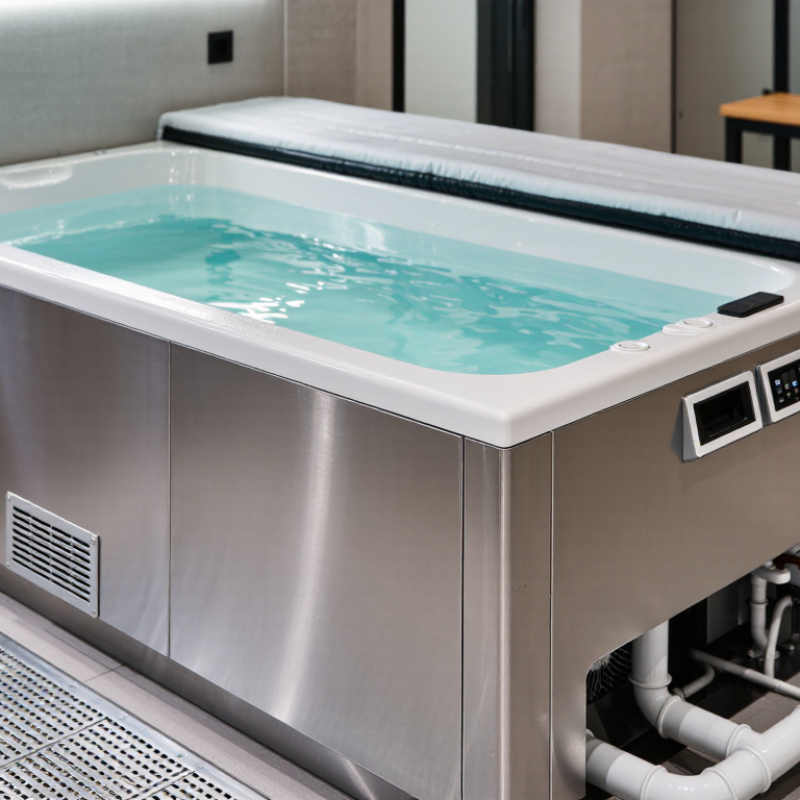
A commercial cold plunge tub should withstand constant use, cleaning, and temperature changes. Choose a rigid, nonporous interior with smooth welded seams. These surfaces leave fewer places for residue to collect. Stainless steel can be durable, but its finish and insulation quality still need inspection. Reinforced polymer may reduce weight, yet scratches can become difficult to clean. Materials matter more than appearance.
Hygiene systems deserve close attention. Look for continuous filtration, accessible plumbing, and water circulation that reaches every section. A disinfecting system can support water care, but it cannot replace testing and scheduled cleaning. Check whether filters can be removed without special tools. Small access panels often become large maintenance problems. Keep written records of water checks, filter changes, and deep cleaning.
Maintenance should fit the staff, not an ideal routine. During a site inspection, open every service panel and imagine a busy morning. Can one worker safely drain the tub? Are cleaning chemicals clearly labeled and stored correctly? A Commercial Hot Tub may look similar, but its maintenance demands can differ greatly. I would not trust vague service claims. Ask for manuals, cleaning procedures, and replacement-part timelines. One overlooked detail is enough. A slightly imperfect inspection is better than a confident guess. Test the drain, lid, seals, and control panel before installation. Scrutinize the corners.
Choosing a commercial cold plunge requires more than checking water temperature. Safety should guide every decision. Look for an accessible emergency stop, insulated surfaces, secure handrails, and slip-resistant flooring. The control panel should display temperature clearly and remain usable with wet hands. Electrical components need professional installation and regular inspection.
Accessibility also affects daily operations. A wide entry, stable steps, and a transfer bench can support users with different mobility needs. Leave clear space around the tub. Keep it simple. Staff should understand cleaning procedures, water testing, drainage, and emergency responses. Maintenance records add accountability, especially when several people use the tub each day. Confirm that the equipment meets applicable local safety and accessibility requirements.
User comfort deserves equal attention. A commercial cold plunge should offer stable seating, suitable depth, and enough room to enter without awkward twisting. Consider water circulation noise, privacy, nearby towel storage, and easy-to-read session controls. Small details matter. A purchasing mistake is focusing on appearance while overlooking the user’s first step into the water. I would also question complicated settings that encourage rushed operation. Clear instructions, visible lighting, and a non-slip surrounding surface make the experience more controlled. Test the tub with different users before committing, because comfort can vary more than product measurements suggest.
A commercial cold plunge tub should be judged by its installation demands, not only its appearance. Measure doorways, service access, floor strength, and drainage before ordering. A full tub can weigh several hundred kilograms, so confirm the floor’s load capacity with a qualified building professional. Electrical work should follow local codes and be completed by a licensed technician. Keep at least 60 centimeters of working space around pumps and filters.
Installation is only the beginning. Estimate electricity, water, filtration, cleaning supplies, labor, and planned maintenance. Energy use changes with water temperature, room conditions, insulation, and daily usage. A simple monthly estimate should include the heater or chiller’s rated power, operating hours, and local electricity rate. That calculation is useful, but not perfect. Real demand may rise during busy periods. Water replacement also creates a visible cost, especially in facilities with frequent users.
Read the warranty before signing a purchase order. Check coverage periods for the shell, refrigeration system, pump, controls, and seals separately. Ask whether labor, shipping, site visits, and replacement parts are included. Clarify exclusions for poor water chemistry, unauthorized modifications, freezing conditions, and commercial overuse. Get these answers in writing. Small details matter. A warranty that sounds broad may cover only defective parts, leaving installation and downtime expenses with the owner. Keep service records, water-testing logs, and dated photographs to support future claims.
A well-designed cold plunge tub can turn a recovery routine into a refined wellness experience. With its compact profile, durable construction, and carefully controlled cooling system, this type of tub is suited to home gyms, patios, and dedicated relaxation spaces. The water can be adjusted to a preferred temperature, allowing users to create a gradual and repeatable practice rather than relying on improvised Ice Baths. Insulated walls help maintain consistent conditions, while a clean, modern appearance makes the tub feel like part of a luxury wellness environment.
Cold-water immersion is often used after exercise to support a refreshing recovery ritual and help the body feel revitalized after demanding training. The experience may also encourage mindfulness, controlled breathing, and a clear transition from physical exertion to rest. For comfortable use, beginners should start with brief sessions and moderate temperatures, increasing duration only as they become familiar with the sensation. A reliable filtration and sanitation system can simplify maintenance, while an easy-to-use control panel makes regular operation more convenient. Users with health concerns should seek professional advice before beginning cold-water immersion, and every session should take place in a safe setting with careful attention to personal comfort.
Start with expected demand, not appearance. A single-user tub suits private studios and quiet recovery rooms. Multi-user models support faster circulation during busy periods. They need stronger filtration and more floor space. Advertised capacity may look optimistic. Test seating, entry width, waterline, and emergency access with real users. Short sessions may allow eight users hourly, but cleaning reduces that figure.
Measure doorways, floor space, and service routes first. Leave clear walking space around the tub. Reserve access for drainage, pumps, filters, and maintenance. A full tub can weigh several hundred kilograms. Confirm floor strength with a qualified building professional. Small spaces become difficult quickly.
Compare water volume, filtration rate, sanitation controls, and recovery time. Larger volume can feel more stable. It may also increase cooling, cleaning, and maintenance costs. Smaller tubs may use resources efficiently. Crowded entry areas can slow operations. Water turnover and bather load should be reviewed together. Capacity claims deserve documented testing.
Look for an accessible emergency stop and clear temperature display. Insulated surfaces can reduce discomfort during contact. Secure handrails and slip-resistant flooring support safer entry. Controls should remain usable with wet hands. Electrical equipment needs professional installation and regular inspection. A safer design is not always the most attractive one.
Check for wide entry points, stable steps, and a transfer bench. Leave enough surrounding space for different mobility needs. Users should enter without awkward twisting. Consider seating depth, waterline, privacy, lighting, and towel storage. Test the tub with several body types and mobility levels. Measurements alone can mislead. Comfort varies more than expected.
Staff should understand cleaning, water testing, drainage, and emergency procedures. Session controls should use simple, visible instructions. Keep maintenance records and water-testing logs near the equipment. Document repairs with dates and photographs. Clear records improve accountability during busy periods. People forget steps.
Include electricity, water, filtration, cleaning supplies, labor, and planned maintenance. Estimate power use from rated wattage, operating hours, and local rates. Room temperature, insulation, and daily traffic change actual consumption. Frequent users may increase water replacement costs. The monthly estimate will not be perfect. Busy periods can raise demand noticeably.
Check coverage separately for the shell, cooling system, pump, controls, and seals. Ask whether labor, shipping, site visits, and replacement parts are included. Clarify exclusions for poor water chemistry and unauthorized modifications. Ask how commercial usage affects coverage. Keep purchase documents, service records, and testing logs. A broad warranty may cover parts only. That detail can hurt later.
Choosing the right commercial cold plunge tub requires more than comparing prices or appearance. This Commercial Cold Plunge Tub Buying Guide explains how to define your facility’s needs, including expected daily usage, available space, tub size, and user capacity. It also highlights the importance of comparing tub designs, cooling performance, temperature control, and recovery time to ensure reliable operation during busy periods.
A suitable unit should be made from durable, easy-to-clean materials and include effective filtration, sanitation, and drainage systems to simplify hygiene and maintenance. Safety and comfort should also be carefully reviewed, including stable entry points, accessible design, secure surfaces, clear controls, and emergency features. Finally, consider installation requirements, energy and water costs, routine servicing, and warranty coverage. A thoughtful evaluation of these factors can help facilities select a practical, safe, and cost-efficient cold plunge solution that supports consistent long-term use.