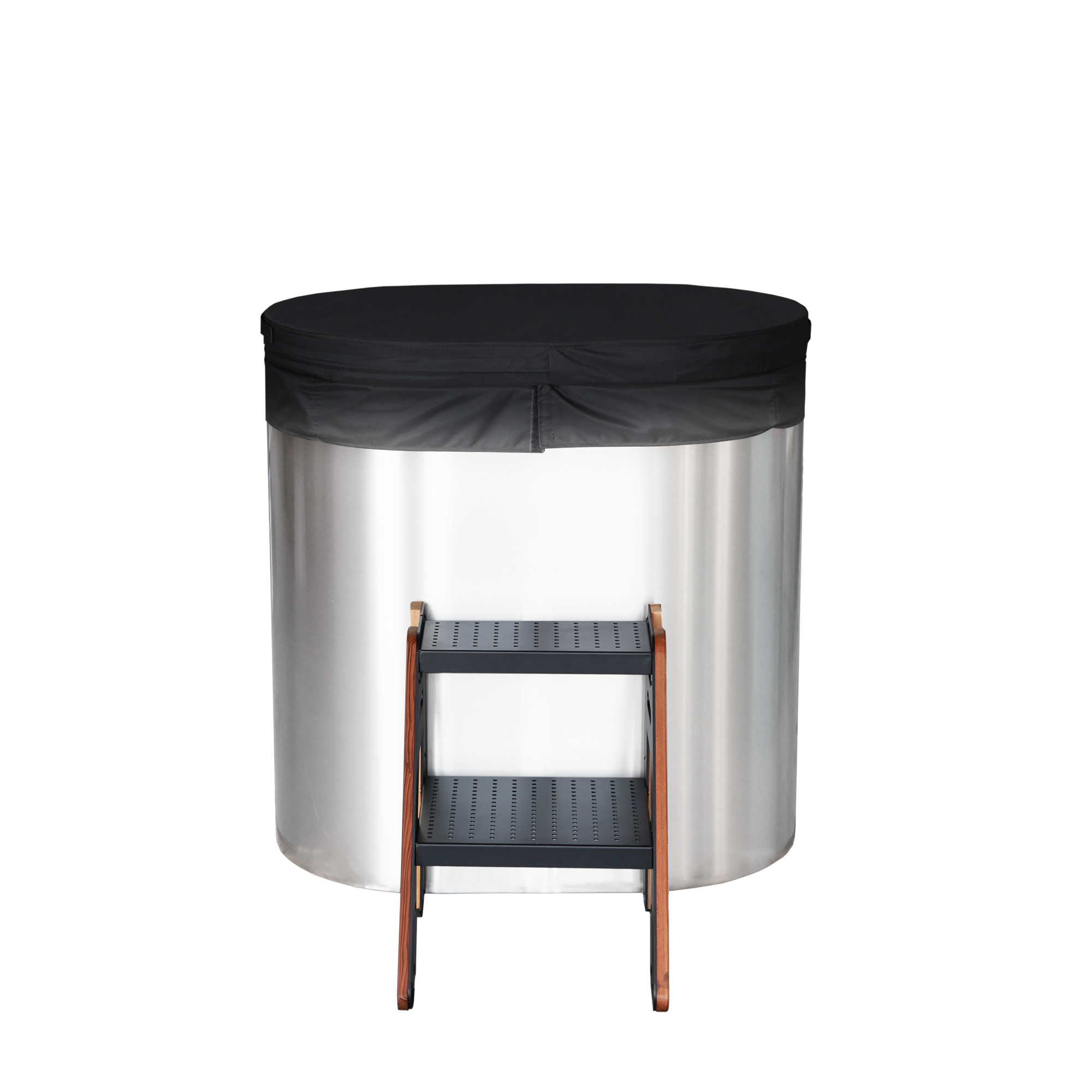
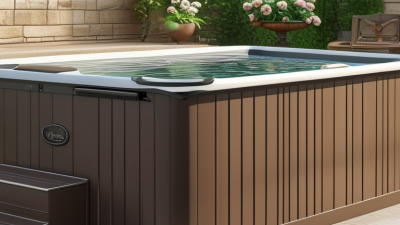
Picking out a commercial Ice Bath Tub isn’t just about grabbing the coldest-looking model out there. You’ve got to think about how it handles regular use, quick turnarounds, and the everyday grind of a busy facility. In this guide on How To Choose A Commercial Ice Bath Tub, we’ll cover all the essentials—cooling power, sanitation, filtration, materials, controls, and support. Sure, a tub might look sleek and impressive in the showroom, but then struggle to keep up when multiple clients hop in one after another. Believe me, those small details really do add up.
Dr. Susanna Søberg, who’s deep into cold exposure research, reminds us that Cold Therapy is a stressor that our bodies need to get used to. That’s a good point to keep in mind: a commercial setup should promote controlled, consistent sessions—not tempt users to go for extremes on every visit. For folks buying a system, the key is clear temperature controls, dependable circulation, and an easy-to-follow cleaning routine for your staff. Also, don’t forget to ask how it performs in a warm room—sometimes conditions aren’t perfect, and that’s when you see the real deal.
Check if the tub's usable capacity matches your daily expected traffic. Make sure filters and replacement parts are easy to get hold of. Pay attention to the pump noise—that can be a giveaway. Take a close look at the seams, drain access, and around the entry point. Those tiny details matter way more than you might think. For example, an Ice Bath Machine Ice Bath Cold Plunge could be perfect for a high-traffic recovery studio—if maintenance isn’t a headache for your team. No system is perfect, and even the best units can fall flat if setup, cleaning, or support gets half-hearted. Before you buy, make sure you get clear instructions on operation and a realistic plan for ongoing support. Then, compare that with what your team actually does day-to-day—because it’s all about fit in the end.
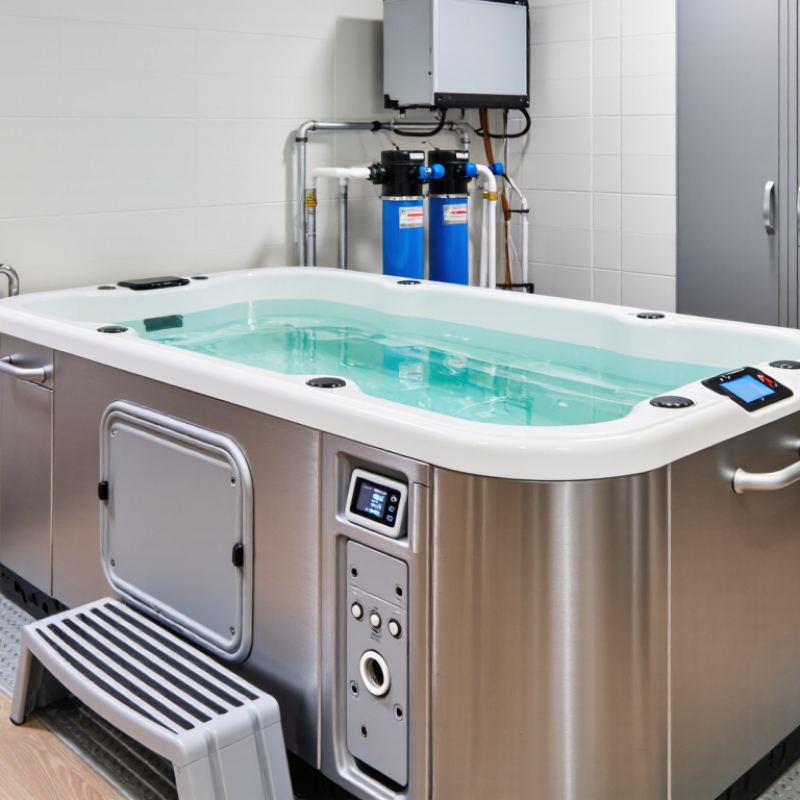
Define Use: 10–15°C (50–59°F), Users per Hour, and Daily Turns
# How To Choose A Commercial Ice Bath Tub In 2026?
Define the use before comparing equipment. For most controlled cold-water sessions, set the operating range at 10–15°C (50–59°F). Use a calibrated thermometer, not the display alone. Record water temperature before each session and after busy periods. Temperature recovery matters more than a dramatic first reading.
Count users per hour. A Commercial Ice Tub serving six people hourly needs different flow planning than one serving twenty. Measure entry, exit, and cleaning time. Leave enough space for safe movement and supervision. A larger tank may look efficient, but it also requires more water, floor space, and maintenance. That trade-off is easy to underestimate.
Daily turns reveal the real workload. If the tub handles ten turns daily, review filtration, drainage, water treatment, and surface cleaning procedures. Follow local requirements and the equipment maker’s instructions. Keep a simple log for temperature, cleaning, repairs, and unusual cloudiness. Do not assume a powerful chiller solves every problem. Poor water circulation can still create uneven temperatures.
Test your assumptions.
A short pilot can expose awkward steps, slow recovery, or underestimated staff time. I would also ask users about entry height and privacy, because practical comfort affects consistent use. The perfect specification may change after one busy week.
How To Choose A Commercial Ice Bath Tub In 2026?
Define use by water temperature, users per hour, and daily turns.
This planning model assumes one scheduled user per cycle, a 4–5 minute turnover period, and an 8-hour operating day. Lower temperatures generally require shorter sessions, while warmer settings may support longer sessions. Actual capacity depends on tub size, filtration, sanitation, water recovery time, staffing, and the organization’s safety protocol.
Size the Tub: Water Volume, Occupancy, and Chiller Recovery Time
# How To Choose A Commercial Ice Bath Tub In 2026?
Water volume controls cooling demand. A 500-liter tub holds roughly 500 kilograms of water. Lowering it by 10°C requires about 20.9 megajoules, or 5.8 kWh, before heat losses. This calculation uses water properties published in the ASHRAE Handbook—Refrigeration, 2022. A 3.5 kW chiller would need about 1.7 hours under ideal conditions. Real recovery takes longer because users, room temperature, piping, and evaporation add heat.
Occupancy matters as much as volume. A narrow single-user tub may recover quickly, while a larger commercial model supports higher turnover. Measure the actual fill line, not the advertised capacity. Then estimate peak use, such as four sessions per hour. ASHRAE’s refrigeration load approach separates product load, transmission, and infiltration, which helps prevent undersizing. The first estimate is rarely perfect. Recheck it after observing busy periods.
**Tips:** Leave headspace for safe entry and displacement. Record water temperature before and after each session. For a Wooden Ice Bath Ice Pool, inspect insulation and drainage carefully. Choose recovery performance, not only tub size. Ask for tested chiller capacity at your target water temperature. A rated output at warmer conditions may not match winter operation. Keep a simple recovery log for two weeks; real data may challenge the spreadsheet.
Rate Cooling: Compare kW, BTU/h, Pull-Down Time, and Heat Load
A commercial ice bath tub should be judged by cooling rate, not only its advertised water temperature. Compare cooling capacity in kilowatts (kW) and BTU/h; 1 kW equals approximately 3,412 BTU/h. Higher capacity usually removes heat faster, but the figure needs context. Ask whether it reflects real operating conditions or an ideal laboratory test.
Pull-down time is more useful when the test details are clear. Check the water volume, starting temperature, ambient temperature, insulation, and cover design. A 500-liter tub starting at 20°C will demand more cooling than a smaller tub starting at 12°C. Frequent users also add heat through body contact, fresh water, and room air. That heat load can quickly change recovery time.
Look beyond the headline number.
For facilities comparing commercial hot tub solutions, request a cooling curve rather than a single rate. It should show how many minutes the system needs to reach the target temperature and how quickly it recovers between sessions. Confirm whether the stated kW describes cooling output or electrical input; these are not interchangeable. A unit drawing more power is not automatically better.
I would also leave room for doubt. Manufacturer calculations may exclude an uncovered lid, warm plumbing, or repeated daily use. Ask for measured data, service intervals, and performance at your actual water volume. A short demonstration with a thermometer and timer can reveal more than a polished specification sheet.
Specify Hygiene: NSF/ANSI 50 Filtration and CDC ≥3 ppm Chlorine
When choosing a commercial ice bath tub in 2026, specify water hygiene before aesthetics. The CDC’s Model Aquatic Health Coderecommends at least 3 ppm free chlorine for Hot Tubs. It also places pH control near 7.2–7.8 for effective disinfection. Ice baths are not always classified identically, so confirm the local operating category with your health authority.
Ask suppliers for documentation showing filtration equipment tested against applicable NSF/ANSI 50 requirements. This standard covers recreational-water equipment, including filtration and treatment components. Certification should match the exact model, flow rate, and installation conditions.
A filter alone cannot remove every contamination risk. Water turnover, chemical dosing, bather load, and cleaning schedules still matter. My practical concern is simple: a clear-looking tub may still carry invisible problems.
Tips:
Install a readable free-chlorine and pH testing station beside the tub. Record results before opening and during busy periods. Keep chlorine at or above 3 ppm, following the approved operating plan. Check the filter pressure daily, then backwash or replace media according to the manufacturer’s instructions. Do not assume “NSF tested” means the entire tub is certified. Verify the certificate, scope, and current standard edition. Mistakes happen, especially during peak hours. Build in a second-person check.
Check Build Quality: 304/316 Stainless Steel and Thermal Insulation
# How To Choose A Commercial Ice Bath Tub In 2026?
Build quality starts with the steel, not the finish. The International Stainless Steel Forum describes 304 as an approximately 18% chromium and 8% nickel alloy. It also notes that 316 stainless steel contains molybdenum, usually around 2–3%. That addition improves resistance to chlorides and harsh environments. For an indoor facility, 304 may be practical. For humid rooms, coastal sites, or frequent chemical exposure, 316 deserves closer consideration.
Inspect the details.
Look for continuous welds, smooth internal corners, and protected drain fittings. A glossy surface can still hide thin panels or weak joints. Ask for the steel grade certificate, not a verbal promise. The weld area matters because poor finishing can trap moisture and cleaning residue. I would also check whether the base remains stable when the tub is full. Small movement becomes expensive over time.
Thermal insulation affects operating effort. The International Energy Agency reported that buildings consumed about 30% of global final energy in 2022, making heat control a serious design issue. However, insulation claims need testing. Request thermal-transmission results measured under ASTM C518 or an equivalent method. Compare insulation thickness, panel continuity, lid fit, and pipe insulation together. A thick wall is not enough. Heat can escape through the cover, plumbing, and poorly sealed access panels. I have seen specifications focus on foam thickness while ignoring the lid. That is an easy mistake to repeat.
Verify Electrical Safety: NEC 680, 5 mA GFCI, and IEC 60529 IP Ratings
How To Choose A Commercial Ice Bath Tub In 2026?
Electrical safety should guide your commercial ice bath selection. NEC Article 680 covers pools, spas, hot tubs, fountains, and similar installations. An ice bath may not fit every category. Ask the local authority having jurisdiction before installation. Follow the equipment listing, wiring instructions, and site-specific requirements.
A 5 mA GFCI can help protect users from ground-fault shock. Confirm whether the tub requires personnel-protection GFCI protection. Check the receptacle, disconnect, pump, heater, chiller, and nearby outlets.
A test button is useful, but it does not replace professional inspection. The circuit should match the equipment’s voltage and current demand. Avoid extension cords near wet floors. Small oversights matter.
IEC 60529 IP ratings describe protection against solids and water entering an enclosure. They do not prove complete electrical safety. IPX4 may indicate splash resistance, while IPX7 concerns temporary immersion under defined conditions. Read the exact test conditions.
A high rating can create false confidence. Inspect cable glands, control boxes, connectors, and drain areas together. One exposed connector can undermine an otherwise careful design.
My checklist is not perfect, especially when installations change after delivery. Recheck the tub after plumbing, flooring, and cleaning procedures are in place.
Choose documentation that clearly identifies the tested enclosure, not just a general product statement.
Compare Ownership: Energy Use, Service Intervals, Warranty, and ROI
# How To Choose A Commercial Ice Bath Tub In 2026?
Ownership costs matter more than the purchase price. Compare commercial hot tub options carefully, even when evaluating cold-water systems. Check insulation quality, cover fit, pump efficiency, and standby power consumption. Ask for measured energy data under similar operating conditions. A busy facility may refill and cool the tub several times daily. That changes the budget quickly. Do not trust one attractive estimate.
Service intervals should be written into the buying plan. Confirm filter-cleaning frequency, water-treatment requirements, pump inspection dates, and refrigerant service procedures. Ask who performs repairs and how quickly parts usually arrive. A clear service manual shows operational maturity. A vague answer is a warning sign. I would also inspect access panels before installation. Technicians need room to work without moving half the facility.
Warranty language deserves close reading. Separate coverage for the shell, cooling unit, controls, labor, and replacement parts. Check whether commercial use changes the warranty period. Calculate ROI using realistic sessions, staffing time, electricity, water, maintenance, and downtime. For example, a cheaper unit may lose revenue during repeated service delays. A premium unit may not recover its cost in a small facility. That uncomfortable gap needs honest review. Build a spreadsheet, then challenge every assumption.
A Practical Guide to the VAPA SIP-I051 Indoor Infrared Sauna: Comfort, Efficiency, and Everyday Use
An indoor Infrared Sauna can be a practical addition to a daily wellness routine when comfort and convenience are carefully considered. Its compact design makes it suitable for many home spaces, while infrared heat warms the body directly rather than raising the surrounding air to extreme temperatures. Before use, place the sauna on a level surface with adequate ventilation and enough clearance for the door and power connection. A comfortable seat, soft towel, and nearby water can make each session easier and more enjoyable.
For efficient everyday use, begin with a moderate temperature and a short session, especially if you are new to infrared heat. Allow the unit to preheat while preparing your space, then adjust the controls gradually according to personal comfort. Keeping the door closed during operation helps maintain consistent warmth and reduces unnecessary energy use. After each session, wipe away moisture from the bench and interior surfaces, leave the door open briefly to air out the cabin, and check that the controls and power cord remain clean and dry.
Simple routines can also improve long-term usability. Use the sauna at a regular time, avoid placing items inside that are not heat-resistant, and follow the supplied care and safety instructions. Anyone with a medical condition, concerns about heat exposure, or special health needs should seek professional advice before establishing a routine.
FAQS
Maintain free chlorine at or above 3 ppm, according to the approved operating plan. Keep pH near 7.2–7.8. Check local requirements. Ice bath classifications can differ by location.
Not always. Clear water may still contain invisible contamination. Use filtration, chemical control, water turnover, and scheduled cleaning together. Looks can mislead.
Request filtration test documents for the exact model, flow rate, and installation conditions. Check the certificate scope and current standard edition. “Tested” does not always mean the complete tub is certified.
Install a readable chlorine and pH station beside the tub. Record results before opening and during busy periods. Check filter pressure daily. A second-person check may prevent rushed mistakes.
Grade 304 may suit many indoor facilities. Grade 316 offers stronger resistance to chlorides and harsh environments. Consider 316 for humid, coastal, or chemically demanding locations.
Look for continuous welds, smooth internal corners, and protected drain fittings. Ask for a steel grade certificate. Check the full tub for movement when filled. Small movement can become costly.
No. Insulation thickness is only one factor. Check panel continuity, lid fit, plumbing insulation, and sealed access panels. Heat may escape through small gaps. I would not trust foam thickness alone.
Request thermal-transmission results from a recognized testing method. Compare results under similar conditions. A detailed report is better than a simple sales claim. I might still recheck the lid, because specifications often overlook it.
Conclusion
How To Choose A Commercial Ice Bath Tub begins with defining how it will be used. Set the target water temperature, typically 10–15°C (50–59°F), then estimate the number of users per hour and daily turnover. Choose a tub with enough volume and occupancy for your operation, while considering how quickly the chiller can recover between sessions. Compare cooling performance by reviewing kilowatts, BTU/h, pull-down time, and the expected heat load rather than relying on appearance alone.
Hygiene and safety are equally important. Look for effective filtration designed around NSF/ANSI 50 principles and maintain chlorine at or above 3 ppm where appropriate and permitted. Durable 304 or 316 stainless steel, quality thermal insulation, and easy-to-clean surfaces can reduce long-term maintenance. Electrical protection should align with NEC 680, include a 5 mA GFCI, and provide suitable IEC 60529 IP ratings. Finally, compare energy consumption, service intervals, warranty coverage, and expected return on investment to select a reliable commercial solution.