

Cold Plunge Equipment Safety: 7 Risks Buyers Should Check Before Purchase
Cold plunging is becoming increasingly popular in homes, gyms, recovery studios, hotels, and wellness facilities. However, choosing a cold plunge is not simply a matter of finding the lowest temperature or the most attractive price.
The equipment itself plays an important role in long-term safety, reliability, and user experience.
A Cold Plunge System may look impressive when it is new, but problems can emerge after months of regular use if temperature control is unstable, electrical installation is unsuitable, components are difficult to access, or the system is not designed for convenient maintenance.
For home users, these issues can turn an expensive wellness purchase into equipment that is rarely used. For commercial operators, equipment problems can affect customer experience, service continuity, and operating costs.
Before purchasing a cold plunge, buyers should therefore look beyond the advertised temperature range and evaluate the overall equipment design.
1. Temperature Control Should Be Stable, Not Simply Cold
One of the most common mistakes when comparing cold plunge systems is focusing only on the lowest temperature.
A very low temperature does not automatically mean a better cold plunge experience. More importantly, users need a system that can maintain the selected temperature consistently during regular operation.
Unstable temperature control may result in noticeable fluctuations between sessions and make it more difficult for users to establish a consistent routine.
A reliable water chiller with precise temperature control allows users to select a suitable temperature and maintain it more consistently. This is particularly important for commercial facilities, where different users may expect a predictable experience throughout the day.
When evaluating equipment, ask how accurately the system controls temperature, how the water is circulated during cooling, and whether the chiller is appropriately matched to the tub volume and intended usage.
2. Electrical Safety Should Be Considered Before Installation
Cold plunge equipment combines water, electrical components, pumps, controls, and sometimes outdoor installation.
That makes the installation environment an important part of overall equipment safety.
Before installation, buyers should confirm the required power supply, electrical specifications, grounding requirements, and installation conditions recommended by the manufacturer.
Outdoor installations also require attention to weather exposure, drainage, ventilation, and the position of electrical components.
Rather than treating installation as an afterthought, buyers should make sure The Cold Plunge system is suitable for the intended location and that professional electrical installation is used where required.
For commercial projects, this becomes even more important because equipment may operate for extended periods and be used by many different customers.
3. Material Quality Matters in a Constantly Wet Environment
A cold plunge operates in continuous contact with water, humidity, cleaning agents, and changing outdoor conditions.
The materials used for the tub, liner, fittings, pipes, and external structure therefore have a direct influence on long-term durability.
Poorly manufactured components may develop leakage, corrosion, cracking, or deterioration over time. These problems can increase maintenance requirements and potentially interrupt normal use.
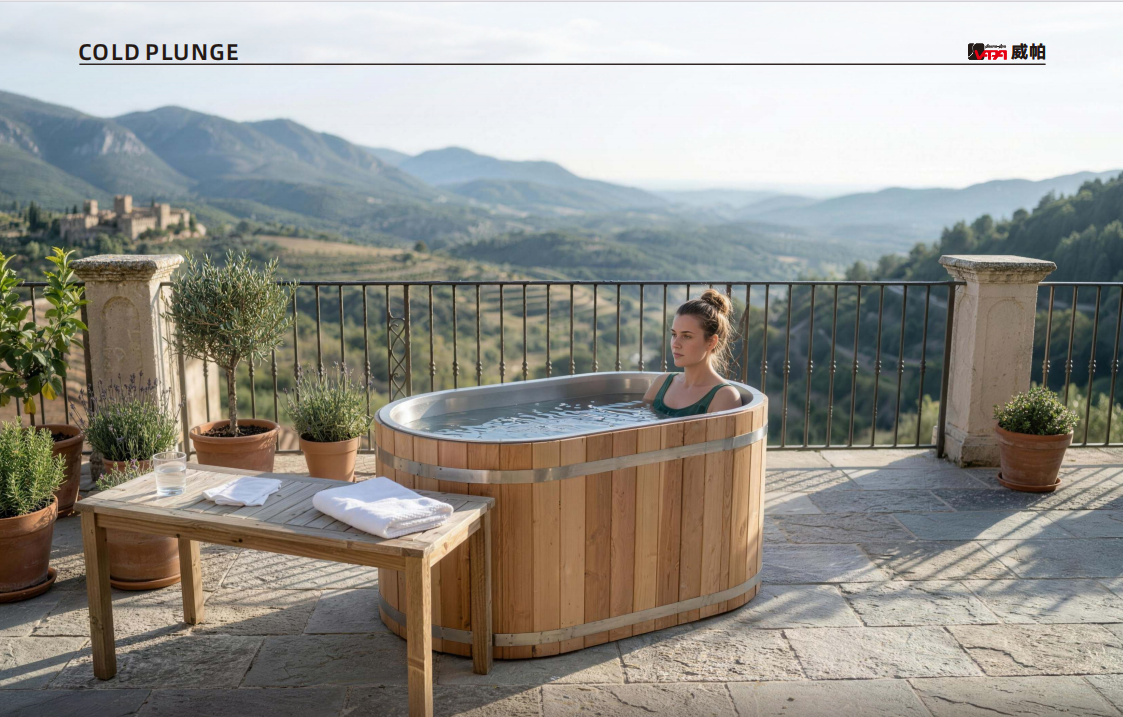
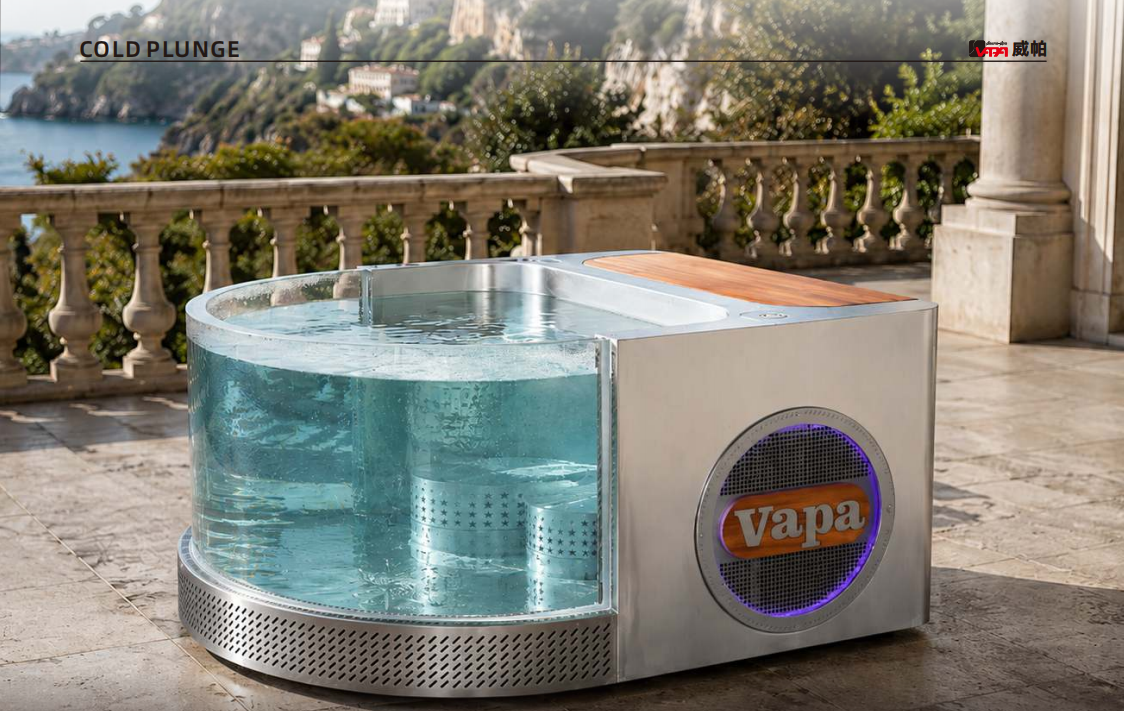
For buyers evaluating a stainless steel cold plunge, it is worth looking beyond the material name itself. Welding quality, surface finishing, connection points, structural design, and overall manufacturing quality should also be considered.
Vapasauna focuses on equipment construction and manufacturing quality as part of its cold plunge product development, helping buyers evaluate a system as a complete piece of wellness equipment rather than simply a container for cold water.
4. Water Hygiene Depends on the Entire Circulation System
Water quality is another important part of cold plunge safety.
A cold plunge used regularly can accumulate sweat, hair, dust, and other contaminants. Without appropriate circulation and water treatment, maintaining clean water becomes more difficult.
However, buyers should not evaluate filtration as an isolated feature.
The circulation pump, filtration components, water flow, drainage, and sanitation system all work together to determine how easily the equipment can be maintained.
A well-designed circulation system can continuously move water through filtration and treatment components, helping reduce the accumulation of impurities.
For commercial facilities, this is particularly important because higher usage frequency can place greater demands on water management.
A cold plunge that is easy to maintain is more likely to remain clean, functional, and available for regular use.
5. Chiller Accessibility Can Affect Long-Term Reliability
The water chiller is one of the most important components of a temperature-controlled cold plunge.
But buyers often pay attention to cooling performance while overlooking another practical question:
What happens if the chiller needs maintenance?
Equipment that makes every major component difficult to access can increase service time and maintenance costs.
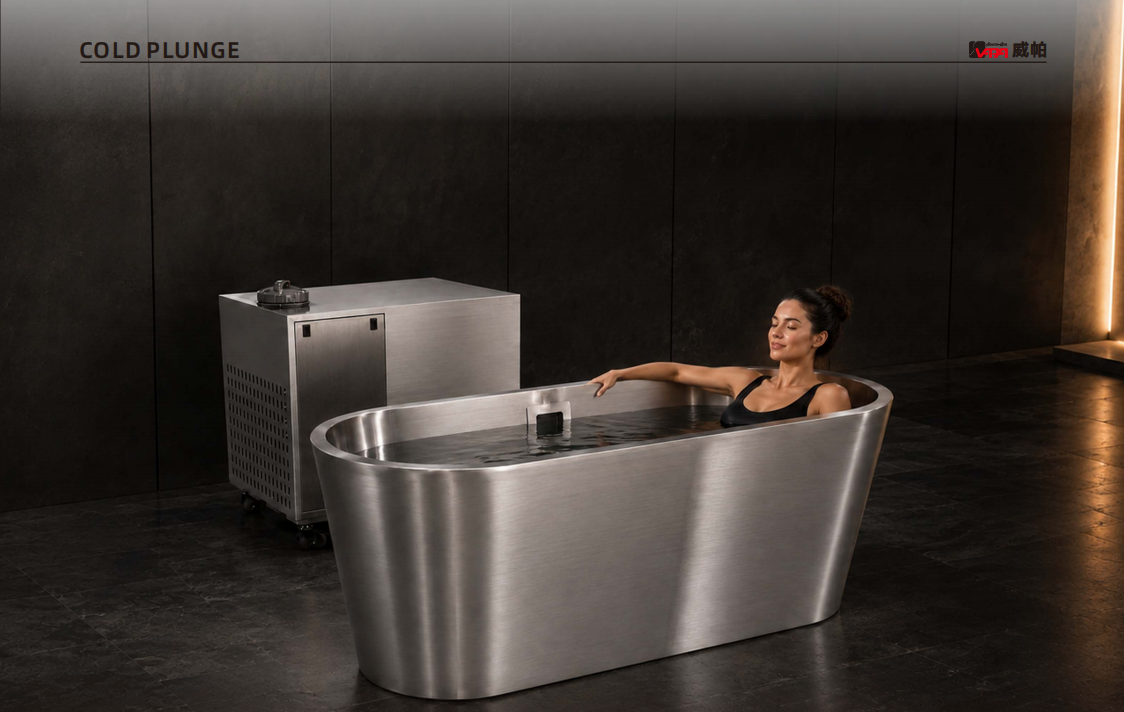
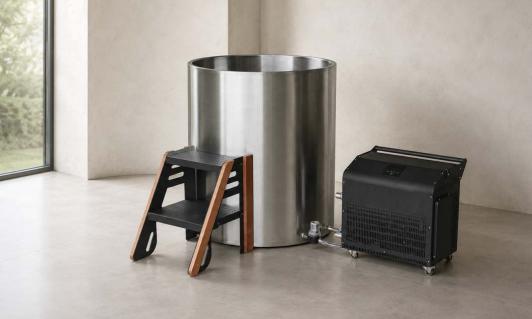
Depending on the system design, a standalone chiller can offer a practical advantage because the cooling unit can be serviced or replaced separately from the tub.
This can be particularly valuable for commercial facilities where equipment downtime may directly affect daily operations.
When comparing cold plunge systems, buyers should consider not only cooling capacity but also component accessibility, ventilation, serviceability, and the availability of replacement parts.
6. Drainage and Maintenance Should Be Designed for Real-World Use
A cold plunge is not maintenance-free simply because the water is cold.
Regular cleaning, water management, inspection, and drainage are still necessary.
Poor drainage design can leave residual water inside the tub or connected plumbing, making cleaning more difficult and increasing maintenance time.
For this reason, buyers should consider how easily the system can be drained, cleaned, and prepared for the next use.
This becomes even more important for commercial operators. If cleaning requires complicated procedures or excessive labor, staff may be less likely to follow the recommended maintenance schedule.
Good equipment design should make correct maintenance easier rather than more complicated.
7. After-Sales Support Is Part of Equipment Safety
The long-term safety of a cold plunge does not end when the equipment is delivered.
Pumps, chillers, filtration components, controls, seals, and other parts may eventually require inspection, replacement, or servicing.
For this reason, buyers should consider the manufacturer's technical support and after-sales capabilities before placing an order.
Questions worth asking include:
- Are replacement parts available?
- Can key components be repaired or replaced individually?
- Is technical support available after installation?
- Are maintenance instructions provided?
- Can the manufacturer support different installation environments?
For commercial buyers, after-sales support can be especially important because equipment downtime may affect customer bookings and daily revenue.
Vapasauna supports international customers with OEM and ODM capabilities, helping different projects select and configure wellness equipment according to their application requirements.
What Should Buyers Look for in a Safer Cold Plunge?
A safer cold plunge is not defined by one specification.
Instead, buyers should evaluate the complete system:
- Stable temperature control
- Appropriate electrical and installation requirements
- Durable and suitable materials
- Effective water circulation and filtration
- Practical drainage and maintenance
- Accessible key components
- Reliable technical and after-sales support
The best equipment is not necessarily the one with the lowest advertised temperature or the lowest purchase price.
For home users, reliable equipment can make cold plunging easier to maintain as a long-term wellness routine.
For gyms, recovery centers, hotels, spas, and wellness resorts, equipment reliability can also influence customer satisfaction, operational efficiency, and the long-term value of the investment.
Make Safety Part of the Buying Decision
Cold plunge equipment should be evaluated as a complete system rather than a simple tub with a cooling unit.
Before purchasing, consider how the equipment will perform after hundreds of uses—not just how it looks on the day it arrives.
Temperature control, electrical installation, material quality, water circulation, drainage, component accessibility, and after-sales support all contribute to the long-term usability of the system.
A well-designed cold plunge should not only provide cold water. It should provide a stable, maintainable, and reliable experience for the people who use it.
For buyers planning a home or commercial cold plunge project, choosing equipment based onsafety, reliability, serviceability, and long-term usability can be far more valuable than choosing based on temperature or price alone.